Last updated November 23, 2026
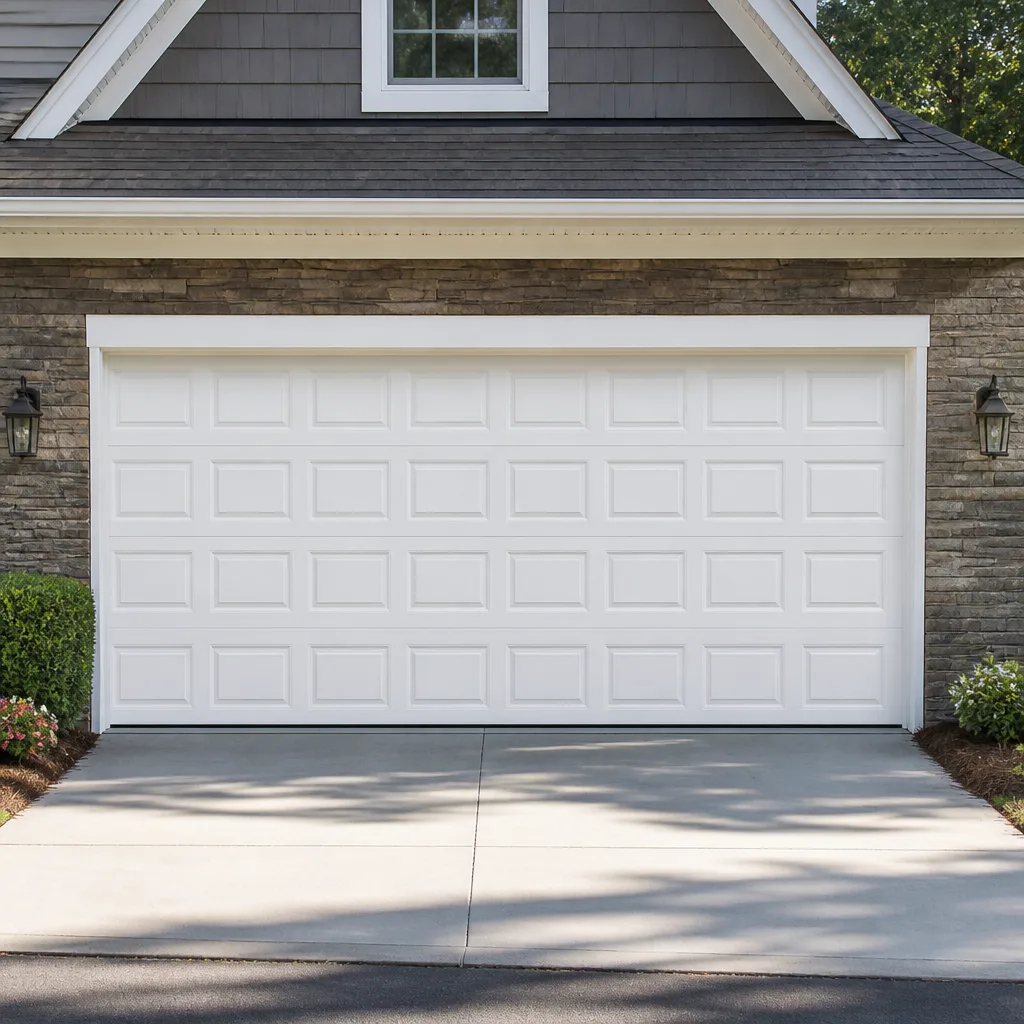 Raised-panel steel
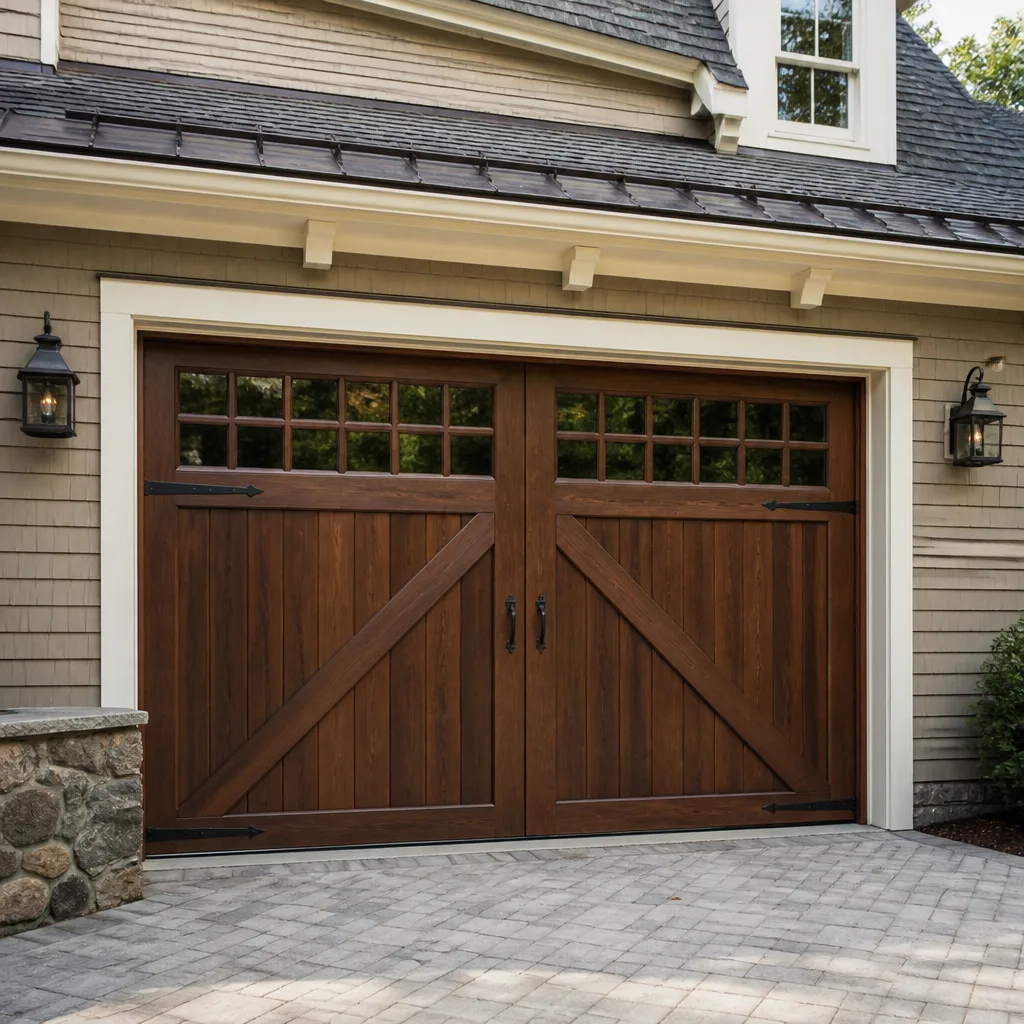 Carriage house
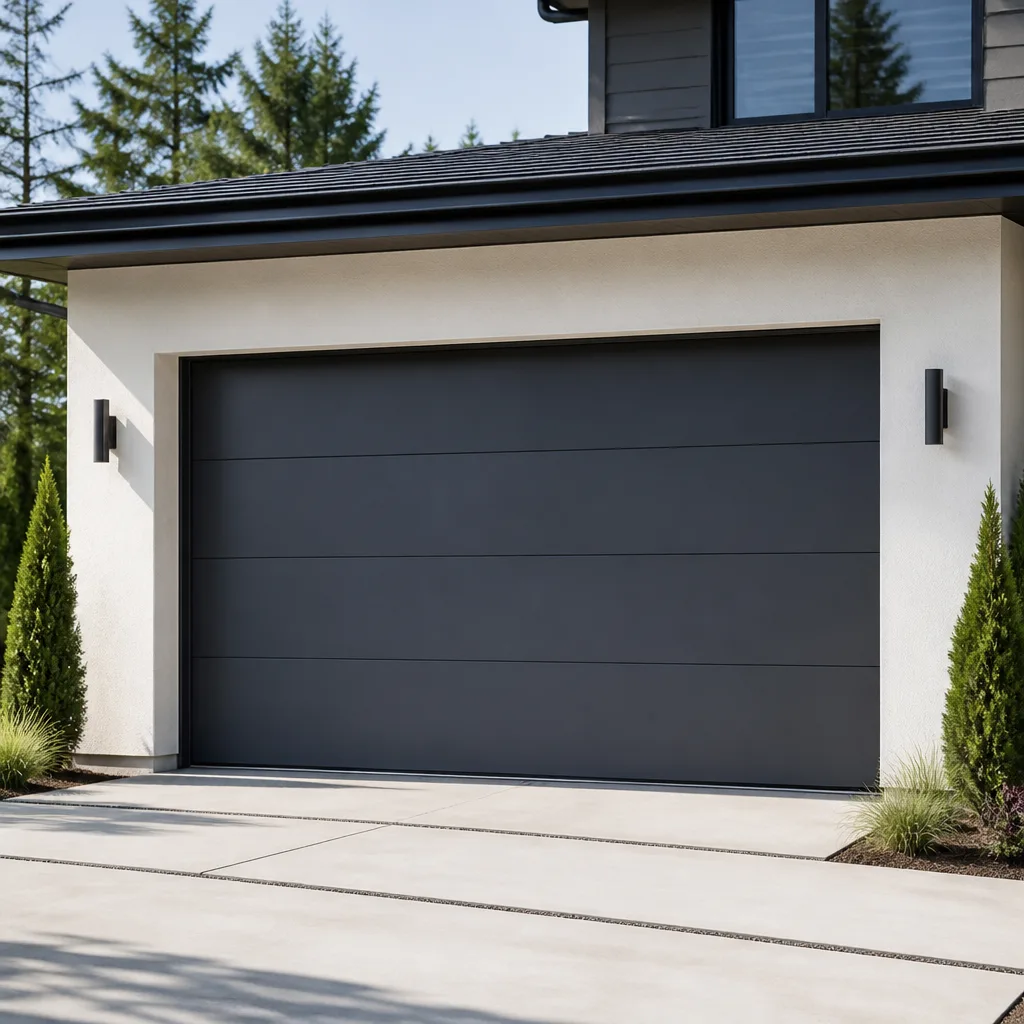 Modern flush
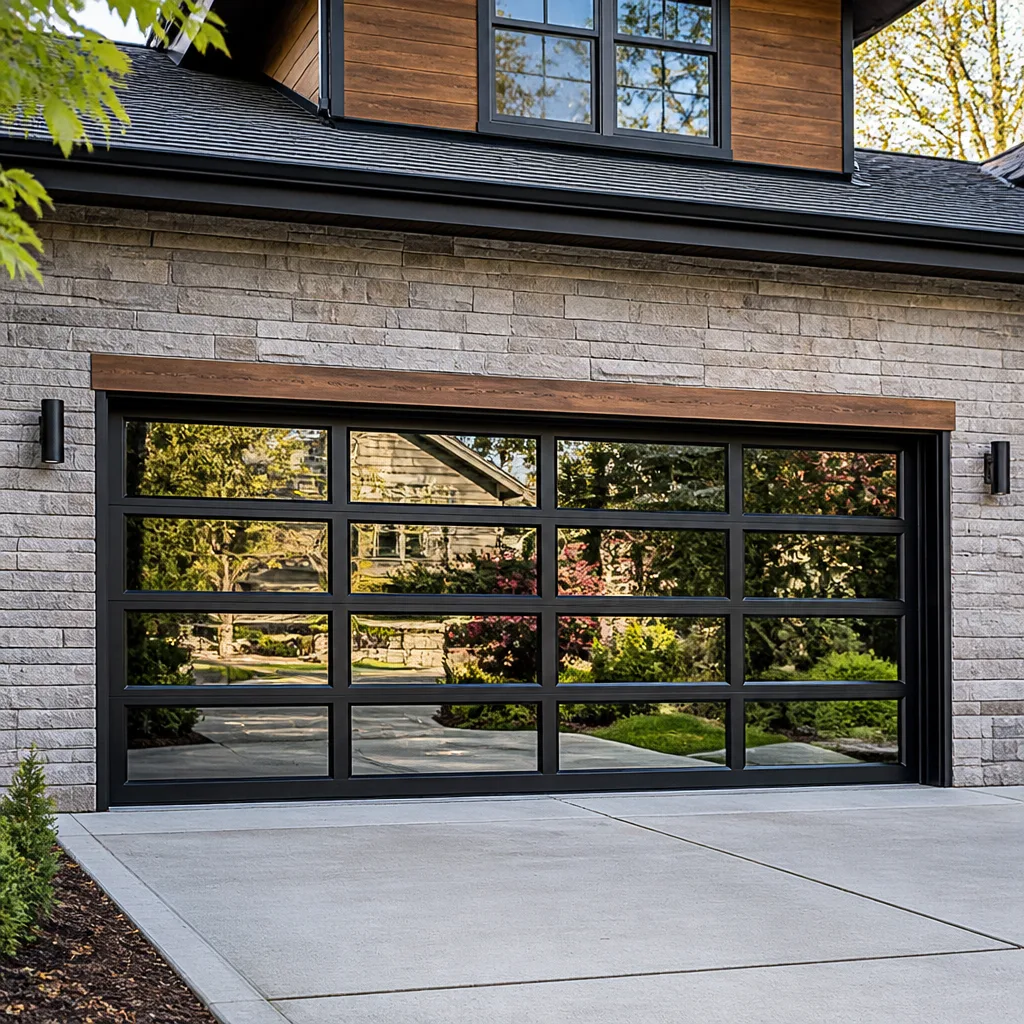 Full-view glass
 LiftMaster openers
 Chamberlain openers
Full 25-point door and opener safety check with every visit - springs, cables, rollers, tracks, and your LiftMaster or Chamberlain opener included
You get a price before we start. It does not change when the pro arrives.
Get your free estimateSeasonal Garage Door Care for Redmond: Year-Round Homeowner’s Guide
Lubricating your garage door springs in July in Redmond is better than nothing, but it’s the October pass, right before the rainy season settles in, that actually prevents the January failure. That’s when the stress cycle begins. Most maintenance calendars are written for a generic four-season climate, which is why so many local doors fail in the wet-cold stretch from October through February while their owners thought they’d done everything right. In this guide, we’ll walk through a month-by-month task calendar calibrated to Redmond’s real weather pattern, explain why summer is the right time to inspect and replace weatherstripping, show you how to spot floor seal gaps before the November rains find them, and lay out the specific hardware check to run after a Redmond windstorm.
Quick Answer
Seasonal garage door care in Redmond works best when you treat October through February as the high-risk window and shift your heavy maintenance into the dry summer months. The single most valuable habit is a pre-rainy-season pass in early October that focuses on lubrication, weatherstripping adhesion, floor seal contact, and fastener tightness. A short spring and fall inspection plus one summer replacement job covers almost everything a Redmond door needs to stay reliable year-round.
Styles & brands we work with
- Raised-panel steel
- Carriage house
- Modern flush
- Full-view glass
- LiftMaster openers
- Chamberlain openers
Table of Contents
- Why Redmond’s Seasons Don’t Stress Garage Doors Equally
- The Redmond Month-by-Month Garage Door Calendar
- Why Summer Is the Right Time to Replace Weatherstripping
- Finding and Fixing Floor Seal Gaps Before the November Rains
- The Post-Windstorm Hardware Check Every Redmond Homeowner Should Run
- How Freeze-Thaw Cycles in March and November Stress Your Bottom Seal
- The Reality of Spring Wear in a Wet-Cold Climate
- When Seasonal Care Isn’t Enough
Why Redmond’s Seasons Don’t Stress Garage Doors Equally
A garage door in Redmond lives through two very different halves of the year, and only one of them does most of the damage. From roughly May through September, the door sits through warm, dry stretches with low humidity and long daylight. That’s the easy season. Metal expands slightly, wood dries, and weatherstripping gets a chance to cure fully after any repair. It looks like nothing is happening to the door.
Then October arrives. Rain returns, temperatures drop into the forties and fifties, and the door starts cycling through wet-cold conditions every single day. This is when the stress cycle begins. Lubricant that thinned out over the summer gets displaced by moisture. Rubber seals that baked dry and stiffened suddenly have to flex again, and some of them crack instead. Fasteners that loosened over the dry months start working their way out under vibration. The failure you notice in January was usually set in motion weeks or months earlier.
That’s why we tell Redmond homeowners to think about maintenance in reverse from the usual advice. Instead of spring cleaning and fall cleanup, the smart pattern here is a summer replacement window (for anything that needs adhesion or curing) and an early-October pass (for everything that protects against moisture). The rest of the year is inspection and small corrections.
The climate also drifts from block to block. Homes on the slopes above the Sammamish Valley see more wind exposure and faster temperature swings than properties tucked into the flatter neighborhoods like Grass Lawn or Overlake. If your driveway faces west and takes the afternoon wind, your hardware tighten-up schedule should probably be more frequent than a sheltered lot on Education Hill. That kind of local awareness is easy to build into your routine once you know what to look for.
The Redmond Month-by-Month Garage Door Calendar
Here’s the calendar we recommend for a garage door in Redmond. It’s built around the actual weather pattern, not the generic spring/fall template. Treat it as a starting point and adjust if your door is older or exposed to more wind.
January through February: Watch, Don’t Work
Short days and steady rain make this the wrong season for anything that needs dry conditions. Your job this stretch is to listen and observe. Run the door by hand once a week and note any new noise, sagging, or hesitation. If something’s off, book a repair rather than waiting until spring.
March: The First Freeze-Thaw Check
March in Redmond gives you freeze-thaw cycles that catch people off guard. Mornings can drop to freezing and afternoons warm up, which stresses the bottom weatherstripping and any seal at the floor line. Walk the perimeter of the door while it’s closed and look for daylight underneath.
April through May: The Deep Inspection
As the dry weather returns, this is your window to look at the hard parts. Open the door fully, check the tracks for alignment, listen to the opener, and note anything that needs replacing before summer.
June through August: Replacement Season
If weatherstripping, bottom seals, or any adhesive-backed trim needs replacing, do it now. Warm, dry air lets adhesive cure fully, which is the difference between a seal that lasts years and one that peels off the first wet week of October.
September: Prep for the Rain
Order any replacement parts you identified in the summer. Book a service call now if you want it before the calendar fills up. Clean the tracks and clear debris from the door travel.
October: The Pre-Rainy-Season Pass
This is the most important maintenance window of the year. Lubricate hinges, rollers, and the spring assembly according to the manufacturer’s recommendations. Tighten fasteners. Confirm the floor seal is making contact across the full width. Test the auto-reverse safety feature.
November: The Second Freeze-Thaw Check
Mirror your March inspection. November freeze-thaw cycles re-stress the bottom seal and can knock alignment out of true if a track bracket has loosened. Catch it early.
December: Rest and Listen
Short days. Use the door normally and pay attention to changes in sound or movement. Any issue that shows up in December is worth booking now so it doesn’t become a January emergency.
Why Summer Is the Right Time to Replace Weatherstripping
Most maintenance guides tell you to replace weatherstripping in the fall. In Redmond, that’s backwards. The reason is simple: adhesive-backed weatherstripping needs sustained warm, dry conditions to cure properly, and you don’t reliably get those in October. When the first wet weeks arrive before the adhesive has fully bonded, the strip peels. You can watch it curl away from the door within days.
July and August are the correct months. That’s when ambient humidity is low, the wood or metal substrate is dry, and you can leave the door closed for hours after installation without worrying about rain. The seal you install in summer survives the first real rainstorm of fall because it’s already bonded.
What to Check on Your Weatherstripping
- Bottom seal: The rubber or vinyl flap along the bottom of the door. Look for cracking, flattening, or visible gaps between the seal and the garage floor.
- Side and top trim: The strips around the door frame that seal against wind and rain. Pull gently; if the trim lifts from the substrate, it’s ready for replacement.
- Threshold: The raised lip at the base of the opening. If it’s cracked or filled with debris, the seal can’t make contact.
- Contact line: With the door fully closed, look for daylight under the bottom seal. Any light means water will find its way in during a Redmond rainstorm.
Steps for a Proper Replacement
- Clean the substrate thoroughly and let it dry fully, ideally on a warm dry day in July or August.
- Choose weatherstripping rated for exterior use in a wet climate; basic interior-grade materials won’t hold up here.
- Measure the full width of the door and cut new material to length, allowing a small overlap at the corners.
- Test-fit the strip before removing the adhesive backing so you can correct alignment without wasting material.
- Press firmly along the entire length and hold it in place as the adhesive sets.
If your door is a Wayne Dalton or Amarr model, the factory bottom seal profile matters. Generic replacements can leave small gaps along the edges that defeat the purpose. We keep the right profile in mind when we recommend a replacement, because we’re used to working on those specific systems.
Finding and Fixing Floor Seal Gaps Before the November Rains
A floor seal gap is a small failure with outsized consequences. It lets water under the door during every Redmond rainstorm, and that water finds its way onto the garage floor, into the framing, and eventually into anything you store against the wall. Finding one in October is easy. Fixing the rot it causes by the following March is expensive.
Here’s the diagnostic routine we recommend. Do it in September or early October before the rain returns.
- Close the door fully and stand inside, facing out. Look along the entire bottom edge for any daylight coming through.
- Slide a piece of paper under the seal. It should meet resistance all along the width. If it slides freely anywhere, that’s a gap.
- Check the concrete for low spots. Water pooling on the garage floor after a rainstorm usually means the slab has settled or the threshold is uneven.
- Inspect the bottom seal for flat spots. A seal that’s compressed permanently in one area won’t make contact even if the floor is fine.
- Look at the sides and corners. Water often sneaks in diagonally under the threshold before it shows up at the center.
Small gaps from a slightly uneven floor can sometimes be corrected by adjusting the down-limit on the opener so the door presses a little closer. If the gap is caused by a worn seal, replacing the bottom weatherstripping is the answer, and summer is the right time for that job. If the slab itself has settled or the door is out of alignment, the correction is more involved and worth a professional look.
One thing we see a lot in Redmond: a seal that was fine all summer starts leaking in the first real storm of November. That’s not a defect, it’s just that the seal only gets tested against water when the water arrives. Get ahead of it in October and you’ll skip that whole problem.
The Post-Windstorm Hardware Check Every Redmond Homeowner Should Run
Redmond gets its share of windstorms in the fall and winter, and they do something specific to your garage door: they vibrate the horizontal track brackets loose faster than any other component. The horizontal tracks are the ones running back into the ceiling from the vertical rails. They’re held by brackets bolted to the framing, and those bolts are the ones that most often work themselves loose under wind-induced vibration.
Run this check after any notable wind event.
- Look up at the horizontal tracks. Confirm both tracks sit level and parallel to each other. A visually sagging track is a red flag.
- Check the bolts at each bracket. Gently try to turn each one by hand. If it moves under light pressure, it needs to be tightened.
- Listen at the door while it cycles. A rattle or clunk from above during travel usually points to a loose bracket or a roller that’s out of the track.
- Test the door by hand. With the opener disconnected, lift the door halfway and let go. It should stay put. If it drifts down, the spring tension or the track alignment needs attention.
- Look for bent brackets. A bracket that’s visibly bent from wind pressure shouldn’t just be tightened; it needs replacing.
Small corrections here are cheap and quick. What makes them worth doing is the consequence of skipping them: a bracket that stays loose lets the track shift, the track shift misaligns the rollers, and eventually the door binds or comes off the track entirely. That’s the point where a windstorm turns into an emergency garage door call rather than a five-minute tighten-up.
If your door is a Raynor or Craftsman model, the bracket geometry is slightly different from other brands, and we adjust the tighten-up accordingly. That brand-level familiarity is why we bring it up. We work on these systems often enough to know where each one is most likely to loosen first.
How Freeze-Thaw Cycles in March and November Stress Your Bottom Seal
Redmond sits in a narrow band where the shoulder months, March and November, routinely produce freeze-thaw cycles: sub-freezing mornings followed by mild afternoons. That pattern is harder on a garage door than steady cold or steady warmth. Each freeze-thaw cycle works the bottom seal through a small flex, and over weeks of that, the material fatigues.
What you’ll notice first is that the bottom seal starts to flatten in one spot. Then a small gap appears at the center or one edge. Then water starts sneaking in at the threshold during the next rainstorm. By the time the symptom is obvious, the seal has been failing for weeks.
How to Spot Freeze-Thaw Damage
- Cracks or splits in the rubber or vinyl along the bottom of the door.
- A seal that feels brittle rather than flexible when you press it.
- Visible flattening in one area, especially over the threshold.
- Water on the floor after a rainstorm, near the door but not elsewhere.
- A door that doesn’t sit perfectly flat when closed, because the seal is no longer making even contact.
Alignment drift is the other freeze-thaw symptom. When the bottom seal deforms, the door can start resting unevenly against the floor. That unevenness stresses the tracks and the spring system a little more each week. Over a few seasons, that drift is what causes the door to bind or hang up mid-travel.
The correction is straightforward: replace the bottom seal during the summer when the material can bond properly, and expect to repeat every few years in Redmond’s shoulder-season climate. If you’ve had the same seal for more than a handful of seasons, it’s worth putting the replacement on your summer calendar this year. It’s a much better problem to solve in July than to notice in the middle of a January rainstorm.
The Reality of Spring Wear in a Wet-Cold Climate
Springs are the highest-failure-rate component in any garage door system, and Redmond’s wet-cold season accelerates their wear. Cold temperatures make steel more brittle, wet cycles introduce subtle corrosion on the coil, and the daily cycling in the dark months adds up. A spring that would have lasted longer in a drier climate may fail years earlier here.
This isn’t a do-it-yourself job, and it’s not a component anyone without professional training should try to handle. Garage door springs are under extreme tension even when the door is down, and a released torsion spring can cause serious injury in an instant. The correct answer to a spring concern is always a trained technician.
What you can do as a homeowner is extend spring life through routine care. Lubricate the coils according to the manufacturer’s recommendation during your October pass, keep the surrounding hardware tight, and have the spring tension checked at the same time as any other major door service. We cover this in more depth in our guide to garage door spring repair if you want the full picture of what spring replacement involves.
If the door suddenly starts feeling heavier, starts making a metallic clang on start and stop, or you see an obvious gap in one of the coils, don’t cycle it again. Call for service. Springs that are on the edge of failure usually give a warning before they snap, and that warning is worth acting on.
When Seasonal Care Isn’t Enough
Most seasonal maintenance fits in a homeowner’s routine. Some things don’t. If your door has started binding through part of its travel, if the opener is doing something new and unpleasant, if a horizontal track has visibly shifted, or if you’ve lost a spring, that’s professional territory. So is any job that involves a full replacement or a new door installation.
We keep our seasonal repair work rooted in the same logic as the calendar above. A broken opener in the middle of winter is an emergency situation, and we run emergency service for exactly that reason. A door that needs a full panel or track replacement in October is a scheduled job, and we’ll book it out properly, do a free measure, and give you a written estimate before any work begins. That’s the same discipline whether it’s a simple repair call or a new door-and-opener install.
If your door isn’t behaving, or if you’re not sure what you’re hearing, it’s worth getting a professional diagnosis on the front end rather than waiting for a January failure. Our technicians have up to 14 years of experience, and we diagnose by brand logic across LiftMaster, Chamberlain, Genie, Clopay, Amarr, Wayne Dalton, Craftsman, and Raynor systems. That means fewer follow-up visits and fewer surprises. For general repairs, see our garage door repair page. For opener concerns, see garage door opener repair.
Common Mistakes to Avoid
- Doing the heavy maintenance pass in spring instead of October. Spring is when the damage from the wet months is already done. The pass that matters is the one before the rainy season, not after it.
- Replacing weatherstripping in October when you don’t have to. Adhesive-backed weatherstripping needs warm, dry curing conditions. A strip installed in October before the rains arrives may peel away by December. Wait for summer unless it’s an emergency.
- Ignoring small floor seal gaps because the door “works.” A door that works fine can still leak water under the threshold for months. The gap doesn’t announce itself; it just slowly damages the floor and anything stored near it.
- Skipping the post-windstorm bracket check. Windstorms are the number-one cause of loosened horizontal track brackets in Redmond, and the looseness compounds. A five-minute check after each storm turns a bigger repair into a small tighten-up.
- Assuming springs are fine because the door still opens. Springs can be failing quietly for weeks. If the door feels heavier than it used to, that’s the signal to have the springs checked, not to keep cycling them.
- Lubricating the wrong parts. Greasing the tracks can actually attract grit and cause binding. The tracks should be cleaned, and only the manufacturer-specified hinges, rollers, and springs should get lubricant.
- Letting summer pass without replacing weatherstripping you know is failing. Waiting until October turns a straightforward replacement into a winter repair, often at the worst moment. If you noticed a problem in July, don’t wait for fall to fix it.
See the difference
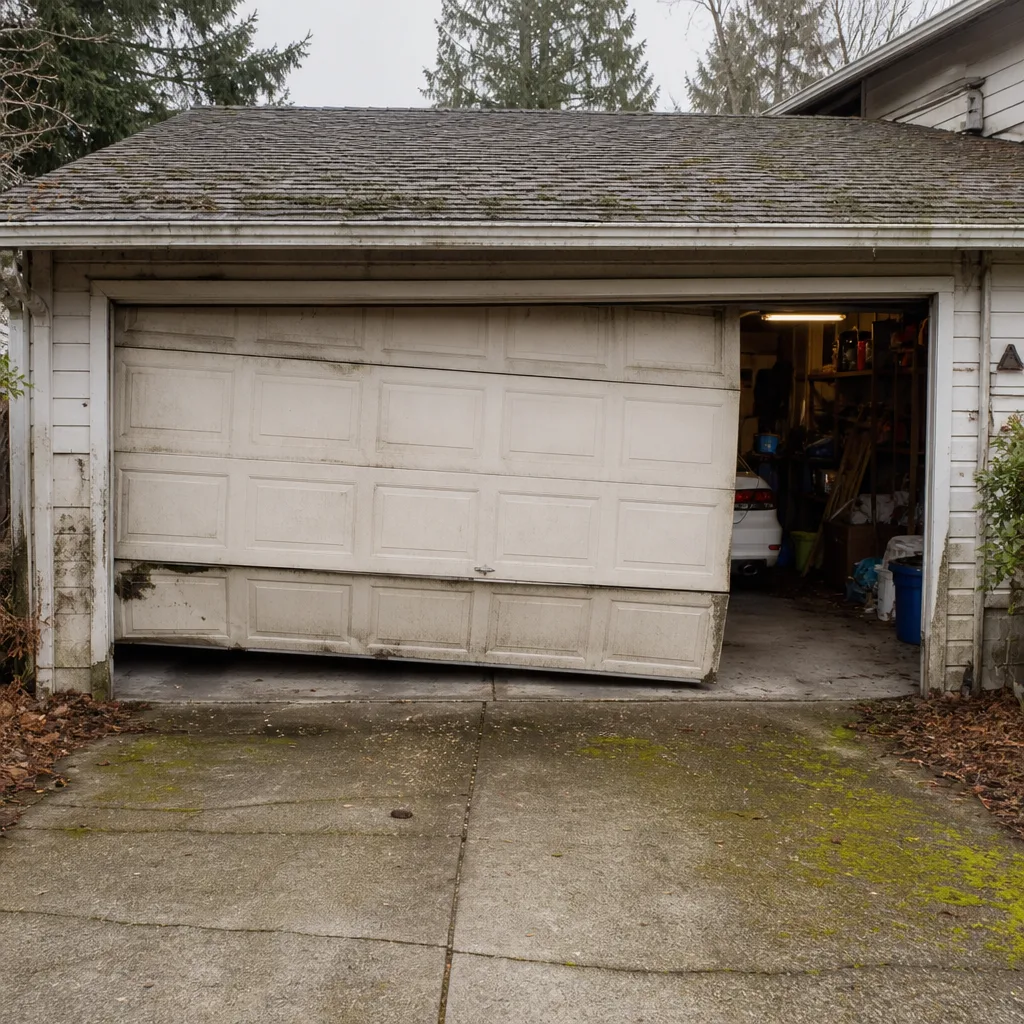 Before
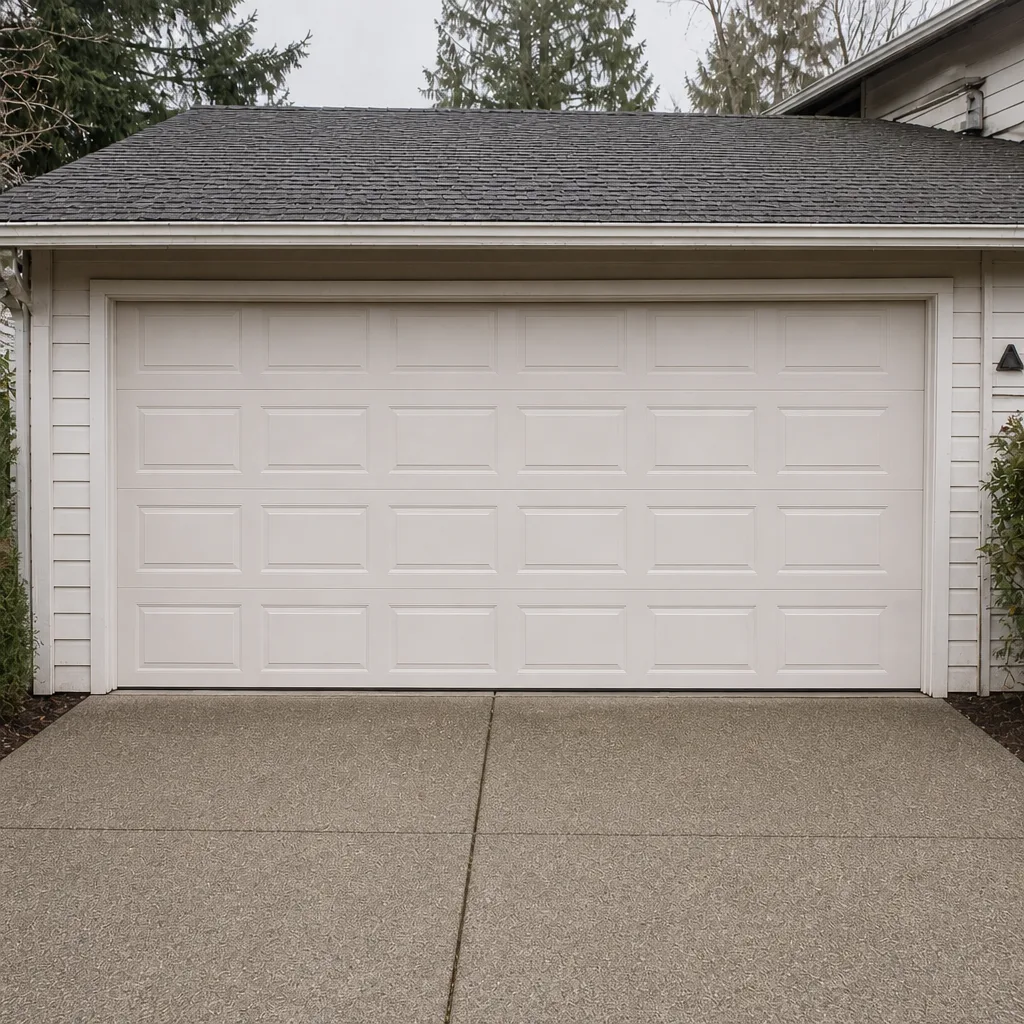 After
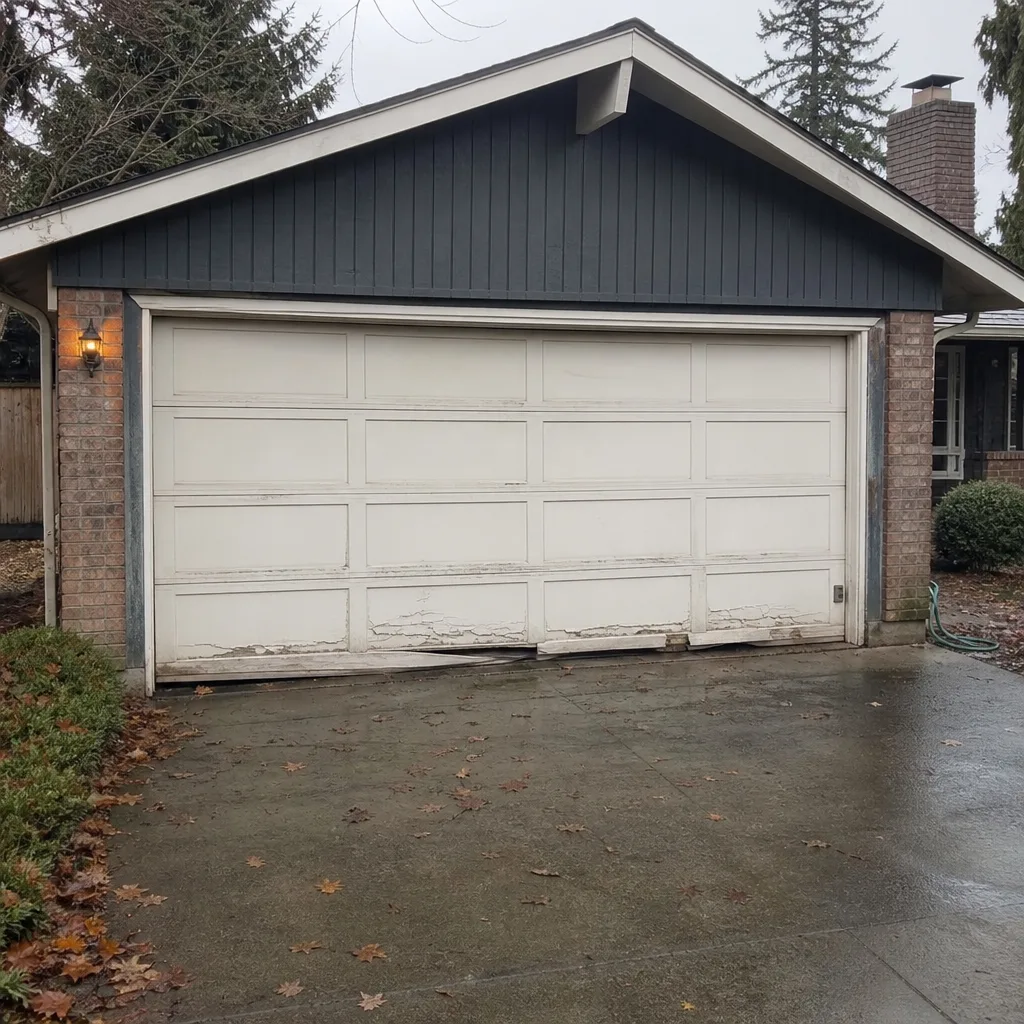 Before
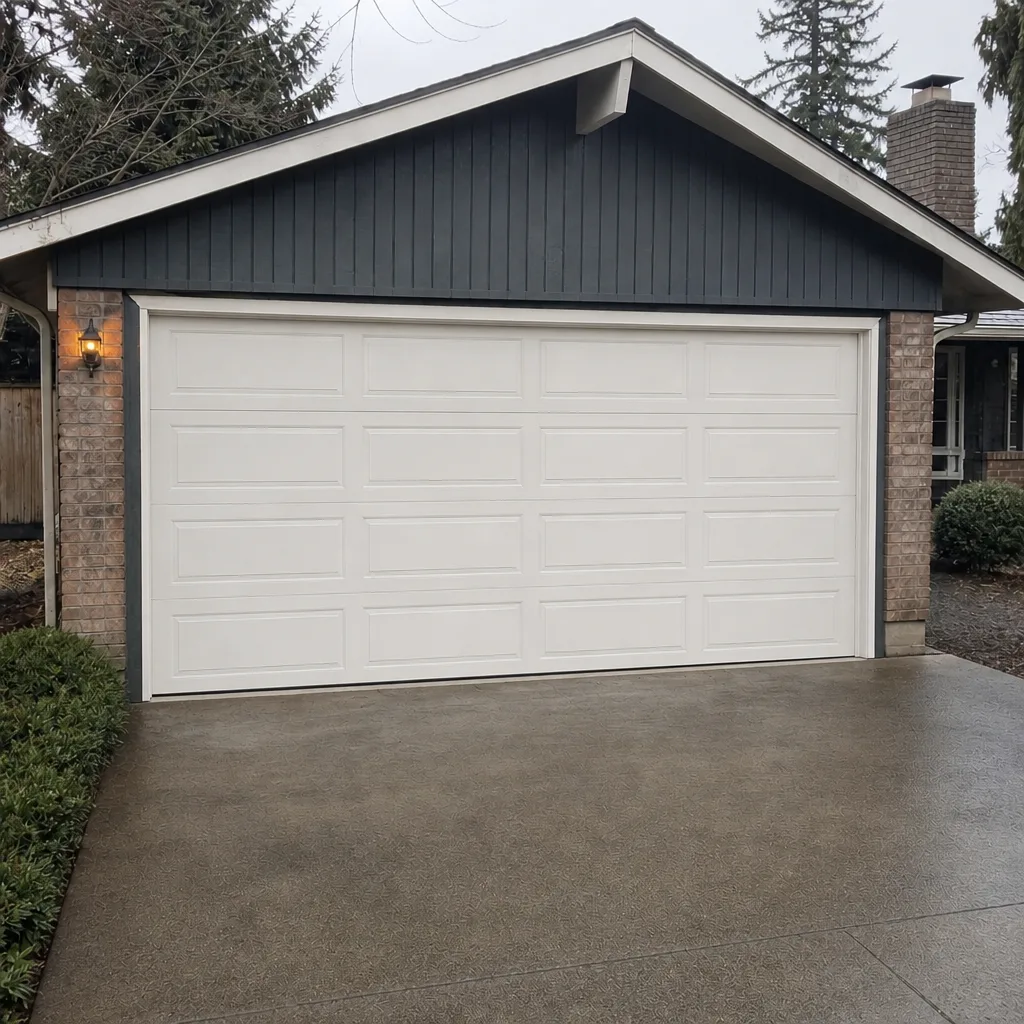 After
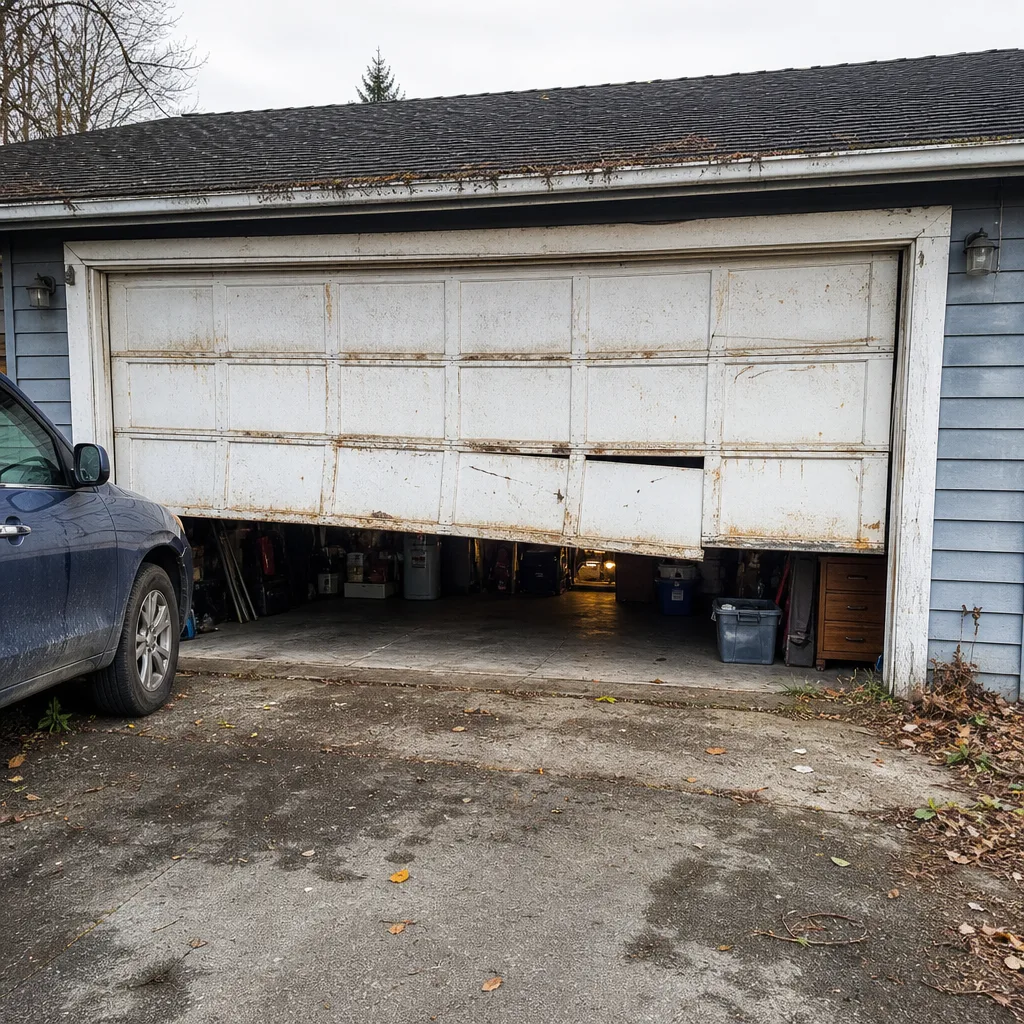 Before
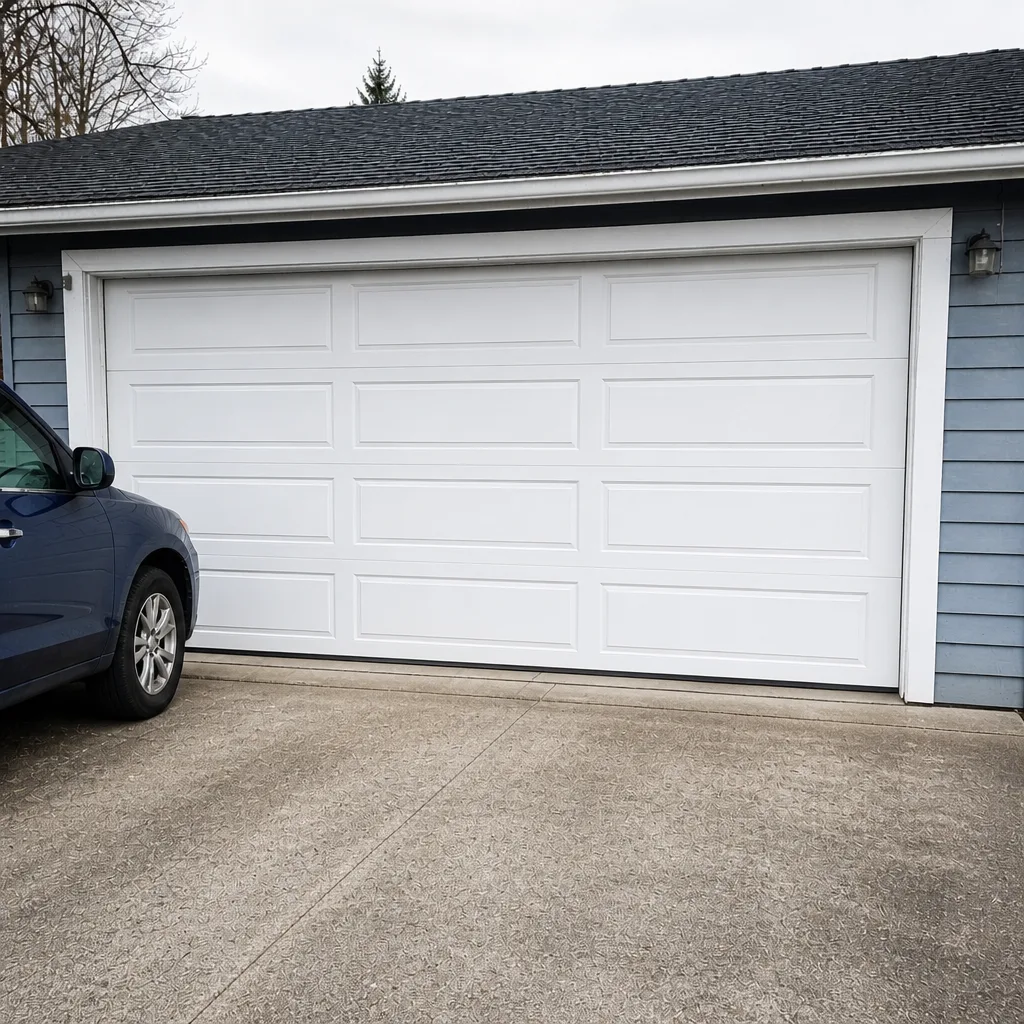 After
When to Call a Professional
Call for service if the door binds, if a spring has obviously failed, if the opener behaves unpredictably, if a horizontal track has moved, or if the annual floor seal inspection turns up a gap that adjustment alone can’t close. Call for a proper measure and written estimate if you’re considering a new door, a track replacement, or a full opener swap. Call for emergency service if the door is stuck open overnight or is failing to close securely. Seasonal care through the calendar above minimizes how often you’ll need to make those calls, but the calls themselves are worth making without delay when they come up. Redmond Garage Door Repair Pros offers free estimates in Redmond – call (855) 337-2071 to book a visit.
Frequently Asked Questions
October. It’s the month before the wet-cold season, and it’s the pass that actually prevents the January failure. Lubricate the hardware, tighten the fasteners, check the floor seal contact, and test the safety reversal. If you do only one maintenance pass all year, make it October.
Summer. Adhesive-backed weatherstripping needs sustained warm, dry conditions to cure properly, and October in Redmond doesn’t reliably provide that. Install in July or August so the adhesive bonds fully before the first rain of the season. Call (855) 337-2071 if you’re not sure what needs replacing – estimates are free.
Close the door fully, stand inside facing out, and look for daylight along the bottom edge. Slip a piece of paper under the seal; if it meets no resistance anywhere, that’s a gap. Catching it in September or October prevents water intrusion in the first real rainstorm.
Windstorms. The horizontal tracks run back into the ceiling and pick up more vibration during wind events than any other component. Check the bracket bolts after every notable storm; a hand-turn test will tell you whether they need tightening.
It repeatedly flexes the bottom weatherstripping and gradually causes alignment drift. Over a few March and November cycles, the seal flattens, cracks, and stops making contact with the floor. Replacing the bottom seal in summer is the fix.
No. We quote the price before any work starts, and the written estimate is the price you pay. If we find something unexpected during the visit, we show you the issue and adjust the scope with your agreement before any additional work. Call (855) 337-2071 for a free estimate on seasonal care or a specific repair.
The Bottom Line
Redmond’s garage door season is not the one most guides describe. The heavy maintenance pass belongs in October, weatherstripping replacement belongs in July or August, and the post-windstorm bracket check belongs after every notable storm. Freeze-thaw cycles in March and November stress the bottom seal more than steady cold does, and the wet-cold stretch from October through February is when the failures you notice in January were actually set in motion months earlier. Build the year-round Redmond Garage Door Repair Pros calendar into your routine and you’ll spend far less time and money on repairs. When the door needs something outside the routine, call us.
Written by the team at Redmond Garage Door Repair Pros.
For a free estimate on seasonal maintenance, spring repair, opener service, or a new door installation in Redmond, call (855) 337-2071 today.