Top Signs You Need Garage Door Service – Don’t Ignore These
A garage door that’s “just a little slow” isn’t a nuisance. It’s usually a spring losing tension or a roller on the verge of seizing, and the difference between a $150 fix and a $600 fix is often one more week of ignoring it. Most serious garage door problems announce themselves long before the door fails completely. The trick is knowing what you’re hearing and which component it’s telling you about. Below, we’ve mapped the warning signs to the parts behind them, so you can describe the problem accurately before anyone arrives. If you’d rather not sort that out yourself, call (855) 337-2071 and we’ll take it from there.
What’s That Noise? A Symptom-to-Component Map
Sound is the first thing to pay attention to on any garage door system. Each type of noise points to a different failure point, and getting it right narrows the repair before a technician sets foot on your property. Here’s how we translate the most common complaints in Redmond.
- Grinding: usually the opener’s gear and sprocket assembly or dry, worn rollers riding hard on the track. A grinding door is working against itself, and the motor is paying the price.
- A sharp pop, often followed by the door dropping or refusing to lift: a torsion spring breaking. This is the most serious sound on the list, and it’s your signal to stop using the door.
- A high-pitched screech: metal-on-metal friction at the rollers, hinges or the torsion tube. Sometimes it’s just lubrication, but a persistent screech after greasing points to a worn part.
- Rattling or banging: loose hinges, a slack chain on a chain-drive opener, or track brackets that have worked loose from the framing.
- A rhythmic thumping as the door travels: a bent track, a damaged panel or a roller that’s come out of its channel.
The point of this map is accuracy. When you tell us “it grinds at the top of the travel,” we can often have the right parts on hand for a Clopay or Amarr door before we arrive, instead of diagnosing on the clock. It’s the difference between a one-visit repair and a callback.
The 90-Second Balance Test for Spring Health
You can check whether your springs are carrying their share of the load without touching a single piece of hardware. Pull the opener’s release cord to disconnect the door, then lift the door by hand to about waist height and let go. A door with healthy springs should sit there, roughly level, holding its own weight.
- Door stays put: springs are doing their job. No action needed.
- Door sinks slowly: springs are losing tension. Worth a service call before it becomes a strand break.
- Door drops fast: springs are badly fatigued. Stop using the opener entirely and call for garage door spring repair.
- Door won’t lift at all, or lifts only with real effort: one or both springs have failed. Do not run the opener.
Run this test as part of your routine checks and you’ll catch spring fatigue weeks before it strands you. What you should not do is adjust, wind or unwrap a torsion spring yourself. Those springs store several hundred pounds of force, and a spring under tension can injure badly even when it looks harmless. The balance test is safe because you’re only lifting the door. Anything beyond that belongs with a trained technician.
Why “The Opener’s Struggling” Is Usually a Spring Problem
Most homeowners assume a strained opener needs an opener repair. In our experience, a door that’s suddenly heavy, sluggish or stalling halfway up is almost always fighting a spring that’s lost tension. The opener is doing extra work it was never designed to do, and if you replace the motor without fixing the spring, you’ll be back with a burned-out unit before long.
Here’s how the two failure modes differ. If the motor runs but the door barely moves, or the door reverses partway up, the springs are the usual suspect. If the motor clicks, hums or does nothing at all, the opener’s gear or control board is more likely. If the wall button works but the remote doesn’t, you’re looking at a receiver or battery problem, not a mechanical one.
This matters for diagnostics. Our technicians have up to 14 years of experience and are factory-familiar with LiftMaster, Chamberlain, Genie and Craftsman systems, both modern Wi-Fi-enabled units and older traditional operators. That brand-level familiarity is what lets us sort spring issues from opener issues on the first visit, rather than swapping parts and hoping. When it’s genuinely an opener fault, see our garage door opener repair service. When it’s not, we’ll tell you.
Pacific Northwest Weather and the Parts It Wears
Redmond’s wet winters put specific stress on your garage door system, and the pattern of wear here is different from what you’d see in a dry climate. Rain, humidity and temperature swings between December and March shorten the life of certain components. Knowing which parts to watch through the wet season helps you plan maintenance instead of reacting to a breakdown.
- Cables: repeated swelling and drying cycles, plus winter rain running down the track, can corrode cable strands faster than the service life the manufacturer anticipated.
- Bottom seals: rubber seals crack and take a set against a cold, wet slab. A worn seal lets water and pests in and stresses the door’s balance.
- Rollers: grit and moisture work into the bearings, and a sealed roller that’s past its life will start to squeal and drag by late winter.
- Hinges and tracks: damp air plus road grit tracked in on tires adds up to rust and sticky travel points.
A door that runs smoothly in August can start dragging by January. If you notice the door gets noisier as the season turns, that’s a Pacific Northwest signal worth a call. Scheduling a service call before the next wet front is easier than waiting for a cable to snap mid-storm.
Severity Triage: Schedule a Call vs. Stop Using the Door
Not every warning sign means the same urgency. Some are “get it looked at this week.” Others mean “park outside and don’t touch the button.” Here’s the triage we’d give a neighbor.
Stop using the door immediately if:
- You heard a pop and the door won’t lift, or the door dropped after the pop (broken spring).
- You can see a broken or frayed cable, or a cable drum that’s come loose.
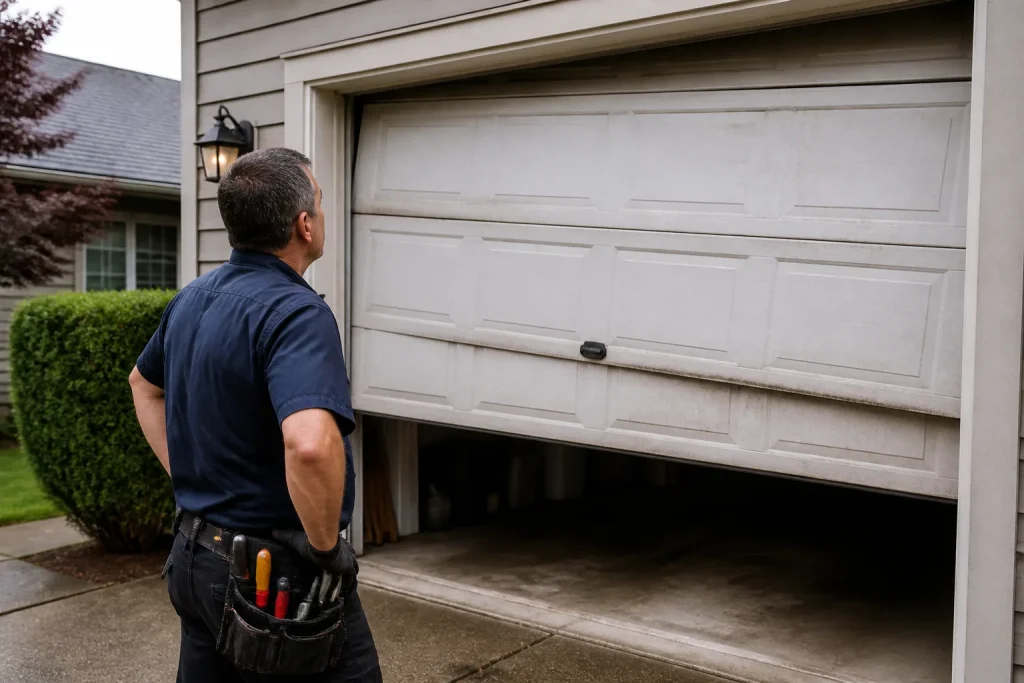
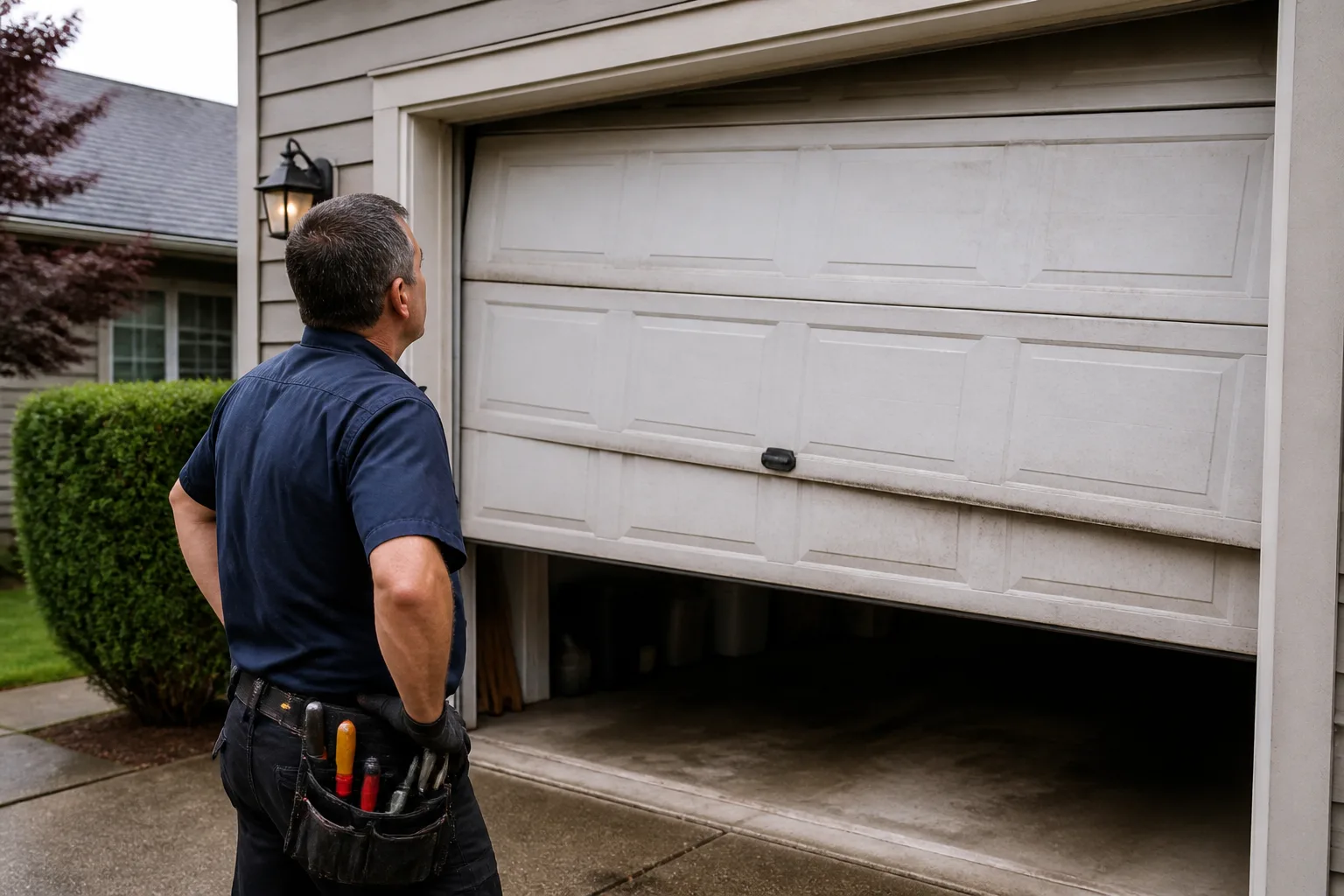
- The door is visibly off its tracks or hanging at an angle.
- A panel is damaged badly enough to leave an open gap, which is both a security and a structural problem.
Schedule a service call soon if:
- The door is balanced-weak but still opens and closes.
- Noise has increased noticeably or the door needs lubrication.
- The opener reverses or strains, but the door still operates.
- A roller is worn, a hinge is loose, or the bottom seal has failed.
When the door is off its tracks or a spring has let go, that’s when our emergency service is what you need. A jammed door is a security gap, and we can respond the same day when the situation warrants it. For everything in the “soon” column, a scheduled call is the right move, and that’s where garage door repair visits typically land.
When to Call a Pro
Some of this list you can safely check yourself. Lubricating rollers and hinges is routine maintenance, and the balance test is safe by design. But the moment you’re looking at spring tension, cables, tracks out of alignment or a door that’s hanging at an angle, call a pro. Those components hold stored energy or control the door’s weight, and DIY attempts cause injuries every year, many to people who thought they were being careful.
If your door is displaying any of these signs in Redmond, our team is a straight call away. We know your door system, we work on the major brands, and we can tell you exactly what’s failing and what it’ll take to fix it, and we’ll give you a written estimate before we start.
Related services in Redmond: garage door repair and garage door spring repair cover most of what this guide points to. For complete system replacement, see garage door opener repair if the operator is the culprit.
The Bottom Line
Don’t wait for a pop and a dropped door to call. A slow, loud or sluggish garage door is early warning, and the fix is usually cheaper and quicker if it’s caught early. If you’re in Redmond and need help, Redmond Garage Door Repair Pros offers free estimates. Call (855) 337-2071. We’ll come out, diagnose the actual failing part, and give you a straight answer on what it needs.
Frequently Asked Questions
Grinding while the door moves points to the opener’s gears, rollers or track. A pop and drop points to springs. If the noise starts when the motor engages and the door does not move, or moves slowly, the springs are the usual cause. If the motor grinds without the door moving at all, expect an opener gear failure. Call (855) 337-2071 for a free estimate.
No. A door with a broken spring should stay closed and unused until it’s repaired. The other spring is carrying the full weight of the door, and running the opener accelerates wear and risks further failure or injury. That’s a stop-using-it situation and time for a licensed technician.
Moisture and grit work into rollers, cables and hinges, and a wet, cold door travels harder than a dry one. Winter rain can also accelerate cable corrosion and stiffen rubber seals. A service call before the season turns will catch it early.
No surprises. We give you a written estimate before any work starts, and that agreed price is what you pay. You’ll know the number before we touch the door. Call (855) 337-2071 for a free estimate on any of the issues in this guide.
Written by the team at Redmond Garage Door Repair Pros.
Need Garage Door Help?
Call Redmond Garage Door Repair Pros - the local pro we connect you with is licensed and insured, here with fast after-hours help in Redmond.
(855) 337-2071