Last updated November 23, 2026
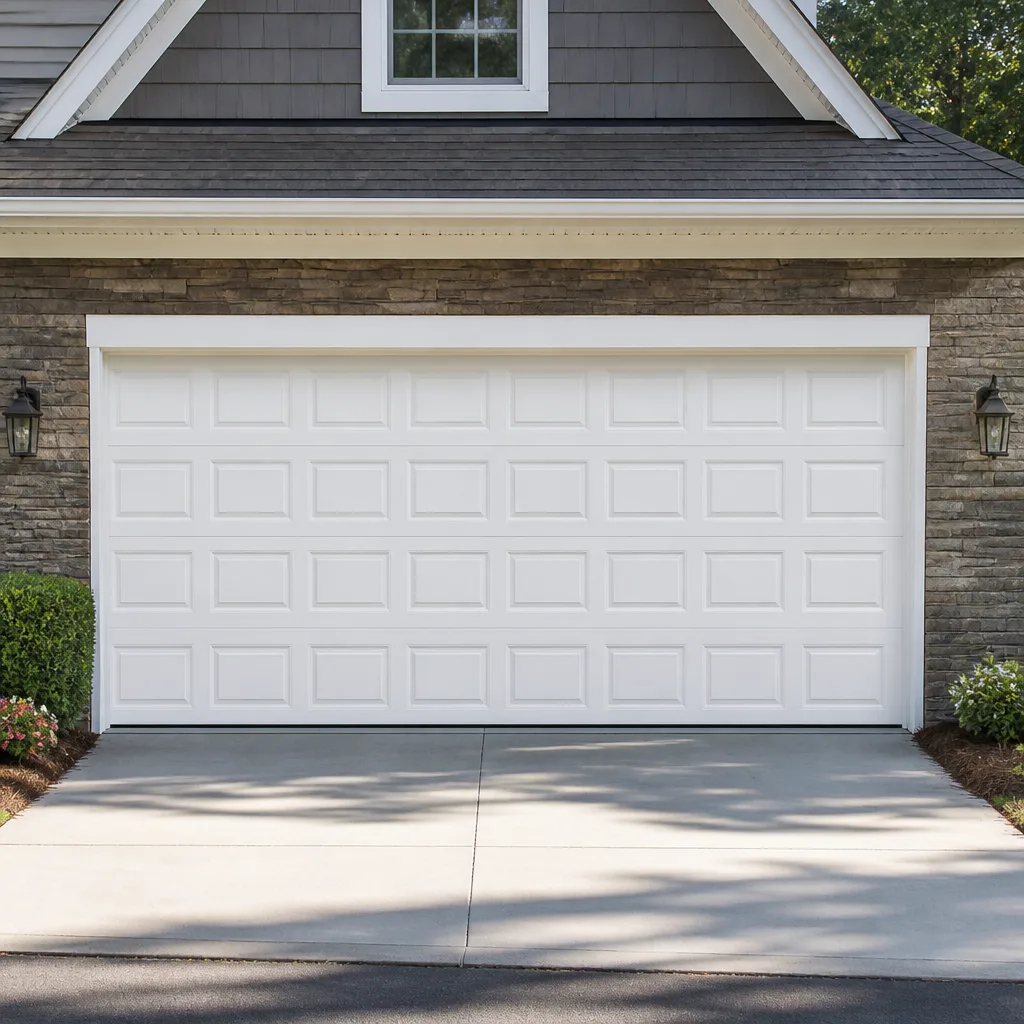 Raised-panel steel
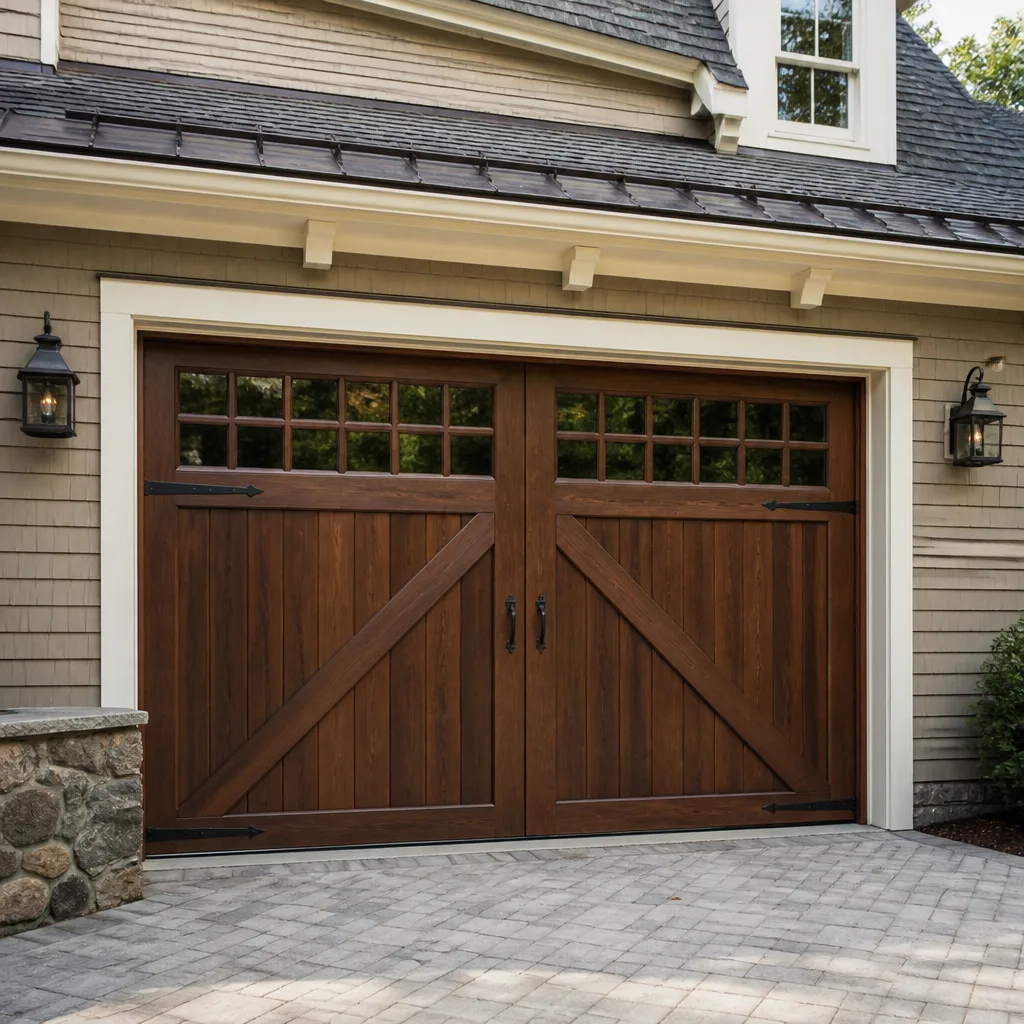 Carriage house
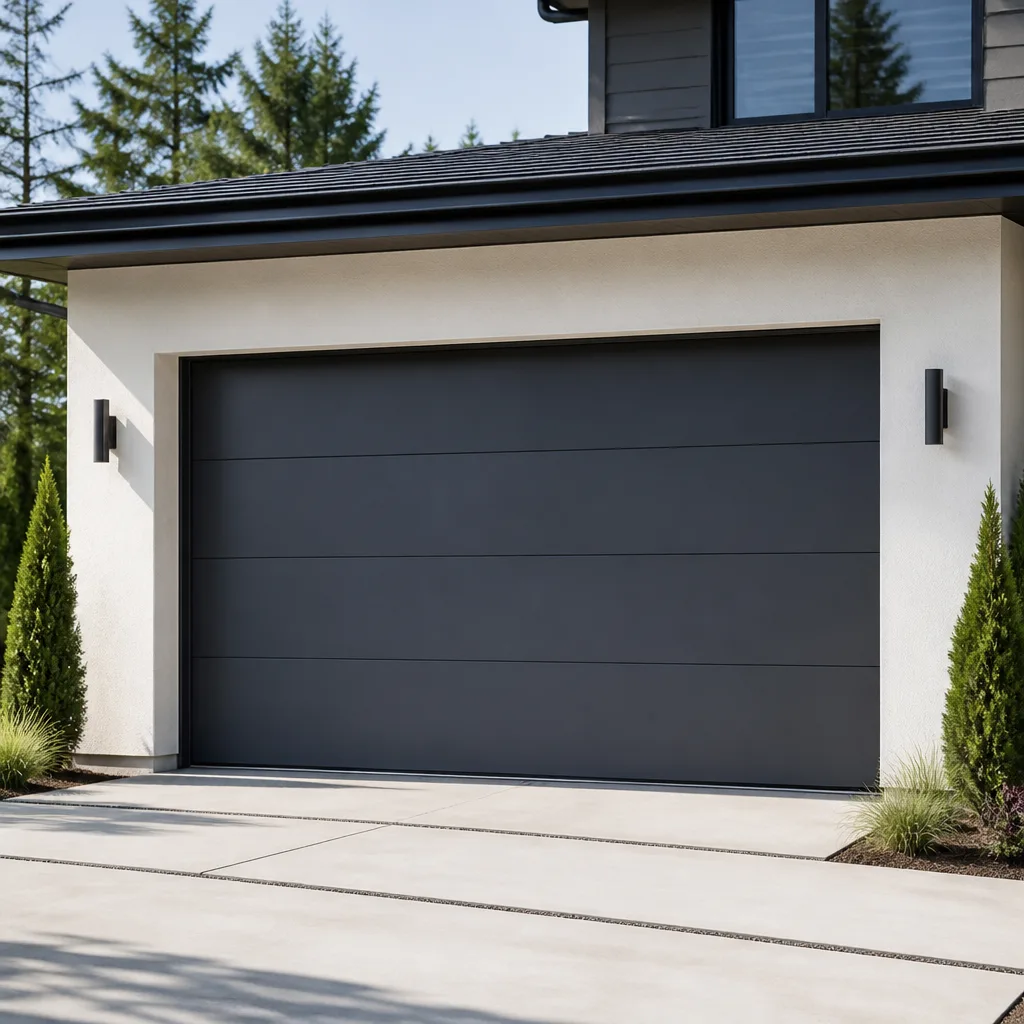 Modern flush
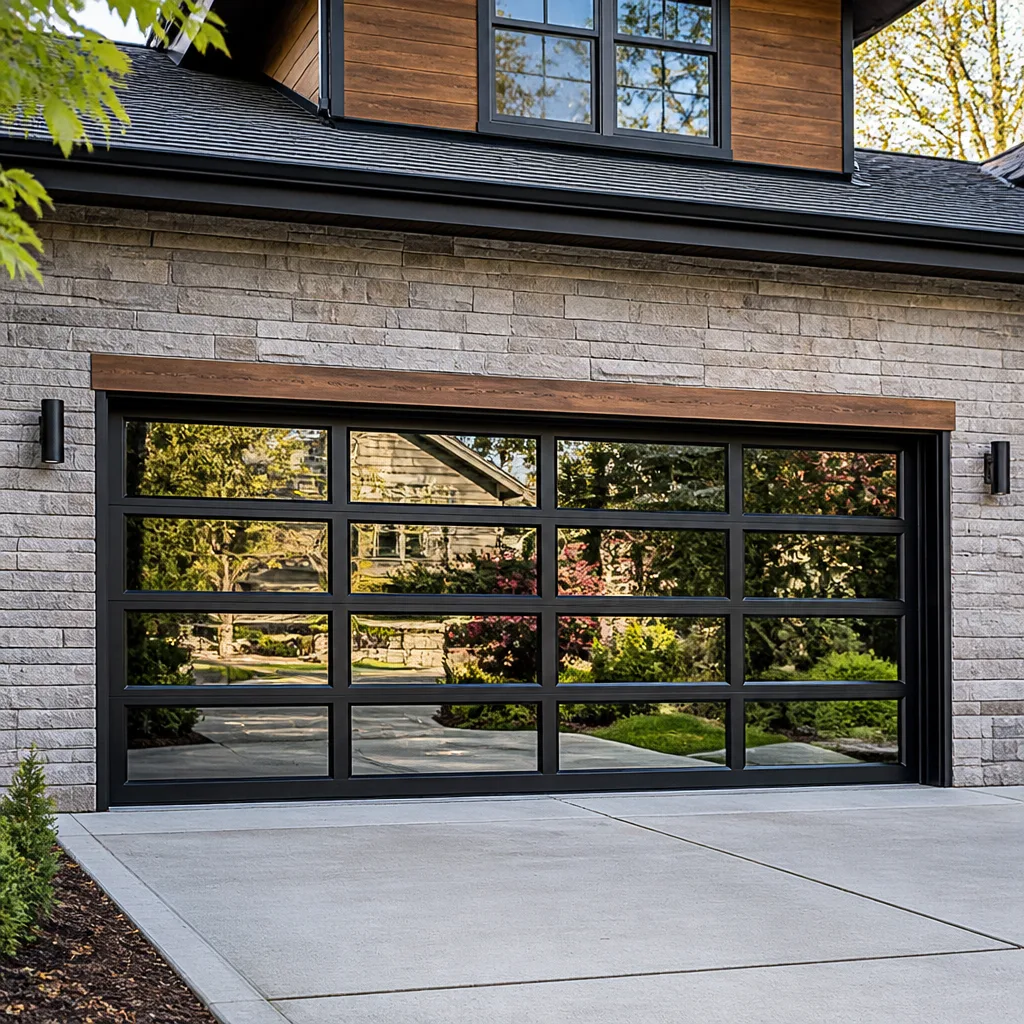 Full-view glass
 LiftMaster openers
 Chamberlain openers
Full 25-point door and opener safety check with every visit - springs, cables, rollers, tracks, and your LiftMaster or Chamberlain opener included
You get a price before we start. It does not change when the pro arrives.
Get your free estimateGarage Door Spring Repair Maintenance Checklist for Redmond Homeowners
A torsion spring rated for 10,000 cycles will fail years early if it spends every Redmond winter cycling through 38°F mornings without lubrication. Most homeowners don’t touch their springs until the door stops moving entirely, and by then the failure has usually been visible for months. Here’s what a spring checklist that actually fits Redmond looks like: how to tell which spring type you have before you do anything else, which lubricant survives wet Pacific Northwest conditions, how to read the warning signs in the coil, and how to do the cycle-count math that tells you how much life is left. We’ll also cover the one mistake we see most often: replacing a single spring when both should go at once.
Quick Answer
A garage door spring maintenance checklist for Redmond homeowners covers five things: identify torsion versus extension springs, lubricate with a silicone-based or lithium grease rated for wet conditions, inspect the coil for gaps and the hardware for wear, track your daily cycle count to estimate remaining life, and replace matched pairs together. Most springs need lubrication twice a year in Redmond’s wet climate, with an extra check each fall before the cold mornings set in.
Styles & brands we work with
- Raised-panel steel
- Carriage house
- Modern flush
- Full-view glass
- LiftMaster openers
- Chamberlain openers
Table of Contents
- How Do You Tell Torsion From Extension Springs First?
- Which Lubricant Works for Redmond’s Wet Conditions?
- What Does a Gap in the Torsion Spring Coil Mean?
- How Do You Do the Cycle-Count Math for Remaining Life?
- Why Replace Both Springs Even When Only One Breaks?
- What Should a Seasonal Spring Checklist Include?
- Why Brand-Specific Garage Doors Need Different Spring Care?
- What Should Homeowners Never Do to Garage Door Springs?
How Do You Tell Torsion From Extension Springs First?
Identify your spring type before anything else on this checklist, because maintenance steps diverge completely from there. A torsion spring sits horizontally on a metal shaft mounted above the door, running parallel to the ceiling. An extension spring stretches vertically along each side of the track, usually above the door’s horizontal rails. If you look up and see a coiled spring stretched along a shaft, you have torsion. If you see a long spring pulling a cable along the side, you have extension.
The distinction matters for Redmond homeowners because:
- Torsion springs carry far more potential energy and are the type we see fail early in cold cycles. They require a specific lubricant (see below) and cannot be adjusted by eye. Visual inspection is the only safe homeowner maintenance on torsion.
- Extension springs often have safety cables running through the center, which is a manufacturer requirement on many older doors. If you see an extension spring without a cable, that’s a safety note to raise with whoever inspects your system.
- Brand context matters too. Doors from Clopay and Amarr commonly ship with torsion setups on heavier panels and extension on lighter single-panel doors. Wayne Dalton’s older system uses a proprietary TorqueMaster assembly you shouldn’t confuse with a standard torsion spring.
Never touch the winding cones or the cable drum on a torsion shaft. Those parts hold enough stored force to cause serious injury if released unexpectedly. For maintenance, you’re looking, not adjusting.
If you’re not sure which type you have, call (855) 337-2071 for a free estimate and we’ll identify it on the spot.
Which Lubricant Works for Redmond’s Wet Conditions?
Use a silicone-based or white lithium grease spray for garage door springs in Redmond, not WD-40. WD-40 is a penetrating solvent, not a lubricant, and it evaporates off the coil leaving the metal exposed to moisture. In the Pacific Northwest’s consistently wet months, that leaves the spring rusting from the inside out faster than it would in a drier climate.
Here’s the sequence we recommend for Redmond homeowners:
- Choose the right product. A silicone-based garage door lubricant or a white lithium grease spray. Look for labels that name coated or galvanized springs and that specify outdoor or wet exposure.
- Apply to the coil, not just the outside. Spray a light coating across the visible length of the torsion spring and into the gaps between coils. The windings need to slide against each other; a dry coil is a grinding coil.
- Lubricate the moving hardware while you’re up there. Hinges, rollers, and the tracks where the rollers ride. Do not lubricate the track itself on an opener-driven door; the opener’s trolley needs friction to engage.
- Re-apply twice a year in Redmond. Once in late fall, before the 38°F mornings arrive, and once in spring after the wet season. A heavily used door benefits from a third application mid-winter.
A dry coil in Redmond’s wet months grinds and binds, and grinding coils fail earlier than properly lubricated ones. Lubrication is the cheapest spring maintenance you’ll ever do.
What Does a Gap in the Torsion Spring Coil Mean?
A visible gap between coils on a torsion spring, where the winding looks separated or the coil appears longer than it used to, means the spring has begun to fracture internally. A gap is a same-day replacement signal, not a wait-and-see situation. When we see a gap, we schedule garage door spring repair for the same day or the next available slot, never later.
Why the urgency? A torsion spring under tension holds the entire weight of the door. Once a coil begins to open up, the failure point has already moved. The spring can snap without warning the next time the door cycles. A snapped spring is not just a door that won’t open. It can drop a door hard and leave an opening in the security envelope of your home.
The gap reads like this:
- Small separation at the ends (less than a quarter inch): get it inspected. A slight gap early on can sometimes indicate a lower-cycle spring rather than imminent failure.
- Widening gap toward the middle of the coil: this is the fracture zone. Treat it as urgent.
- Visible break with the shaft exposed nearly a full span: the spring has already failed or is one cycle away from it. Keep the door closed and call.
Do not attempt to close up the gap or “help” the spring back into shape. Wind it back against its tension and the energy stored in that coil is enough to break a bone. Leave it and call us.
How Do You Do the Cycle-Count Math for Remaining Life?
Estimate remaining spring life by multiplying how many times per day your household opens and closes the door by 365, then dividing into the rated cycle count. A two-car Redmond household commonly cycles the door six to eight times daily, which adds up to roughly 2,200 to 2,900 cycles a year. Against a 10,000-cycle spring, that’s about three-and-a-half to four-and-a-half years of expected life.
Here’s how to run the math for your home:
- Count one full cycle as one open plus one close.
- Estimate daily cycles. Morning departure, evening return, mail run, trash run, kids’ bikes, garden tools. Most Redmond households land between four and ten cycles on a typical day.
- Multiply by 365. Six cycles daily yields 2,190 cycles a year; eight yields 2,920.
- Divide the spring’s rated cycles by your yearly total. A 10,000-cycle spring at 2,920 cycles a year has about three-and-a-half years of life.
- Adjust for temperature. Cold cycles count for more wear than mild ones on any spring. Redmond’s winter mornings compress the effective lifespan below the headline cycle rating.
The math doesn’t replace an inspection, but it tells you when to start planning. If your math puts you within a year of the spring’s rated cycle count, book an inspection before the cold months hit. If a Clopay or Amarr door shipped with a spring rated for more cycles, your timeline stretches, but the logic stays the same.
If you’d rather skip the arithmetic, Redmond Garage Door Repair Pros offers a free estimate that includes a spring inspection and a written cycle estimate.
Why Replace Both Springs Even When Only One Breaks?
Replace both springs when one fails, even if the second looks fine. Matching springs wear at the same rate. When one breaks, the other has usually aged to the point of failure too, usually within weeks. Replacing just the broken one leaves the surviving spring primed to fail and drops the full lifting load onto a single coil.
Here’s how to tell your contractor is doing it right:
- They quote a matched pair. The written estimate names two springs of the same rating, not one. If the quote only lists a single spring, ask why.
- They check the door’s weight. A door with a heavier panel (a steel Clopay, a Wayne Dalton model) may carry springs rated for a higher cycle count. Matching the pair means matching the rating, not just the part.
- They test the door’s balance after installation. A properly paired spring set lifts the door so it holds roughly halfway open on its own. If they don’t test it, the springs aren’t correctly matched.
- They don’t offer to reuse the surviving spring. A used spring with an unknown cycle history doesn’t belong in a matched set.
The cost difference between one spring and a matched pair is usually modest. On a torsion setup, expect around $180 to $340 for the first spring and about double that for a pair, since the pair runs roughly twice the single-spring estimate. The written quote you receive sets the final price, and you should see that quote before any winding begins.
What Should a Seasonal Spring Checklist Include?
A seasonal spring checklist for Redmond should run four times a year: a spring check after winter, a summer check for track debris, a fall check ahead of the cold mornings, and a mid-winter lubrication pass. Homeowners who skip the fall check are the ones we see most often calling for spring repair in January.
Walk through this at each seasonal check:
- Spring coil: look for a gap, a sag, or a visibly stretched winding. (See the gap section above.)
- Lubrication: reapply a light coat, especially in fall before the 38°F mornings arrive.
- Bolts and brackets: check for loosening. Cold and wet weather works on metal joints faster than warm weather does.
- Door balance: disconnect the opener with the emergency release and lift the door manually. It should rise smoothly and hold at about the halfway point. A door that wants to fall or wants to rise on its own has a spring tension problem.
- Track alignment: check for dents or misalignment from a bumped car or a fallen object. Track issues put extra stress on springs.
- Rollers and hinges: check for flat-spotted or worn rollers. A dry roller grinds on the track and by extension wears the mechanism faster.
- Weatherstripping: in Redmond, wet months punish a compromised bottom seal, and it also strains the opener when the door binds against a swollen seal.
A garage door repair visit once a year isn’t required by any code, but the inspection will catch what you can’t safely check yourself, including the state of the cable drum and the winding cones.
Why Brand-Specific Garage Doors Need Different Spring Care?
Different door brands carry different spring systems, and the maintenance that applies to one won’t apply cleanly to another. That’s the whole reason we work on the specific brands a Redmond homeowner actually has, rather than treating every door like a generic unit. Diagnosed right the first time beats trial-and-error guesswork every time, especially in cold-morning season.
Brand-specific patterns worth knowing:
- Clopay and Amarr doors frequently ship with torsion setups on heavier panels and carry springs rated per model. Knowing the door’s rated weight matters when we match the pair.
- Wayne Dalton used a proprietary TorqueMaster assembly on many of its doors, which isn’t a standard torsion spring. Maintenance and replacement on that system follow different steps and use different parts. If you’re not sure which you have, have it identified before doing anything.
- Craftsman openers paired with extension springs on older doors: the balance check matters more, because an opener straining against a weak spring wears out its gear faster.
If your opener is the part acting up rather than the spring, the same brand logic applies. We handle LiftMaster, Chamberlain, Genie, and Craftsman openers across both legacy and WiFi-enabled units. Learn more on the garage door opener repair page.
What Should Homeowners Never Do to Garage Door Springs?
Never wind, unwind, adjust, or remove a torsion spring yourself. Torsion springs hold the entire lifting force of the door, and that force is stored even when the door is at rest. We install a proper winding bar and keep hands clear of the wind path for a reason: a coil released under tension can break bones, tip a ladder, and take fingers off. This is the one piece of garage door maintenance that stays a professional job.
What homeowners should never do:
- Cut a torsion spring to “release” it. The stored energy releases on its own schedule, not yours.
- Use an adjustable wrench to turn winding cones. The cones require a specific fitting bar; a wrench can slip and release the coil.
- Remove the safety cables from an extension spring. Those cables are what keep a broken spring from whipping through the garage.
- Force a door with a broken spring. Some doors can be opened by hand with a broken spring, but on a torsion setup, lifting a door the spring was holding is dangerous. Leave it closed and call.
- Stand under the door while inspecting. If a spring is at the breaking point, being under the door is the one place you don’t want to be.
For everything else – lubricant, bolts, weatherstripping, visual checks – you’re fine on your own with a step stool and a flashlight. For anything that touches the spring itself, call a trained professional.
Common Mistakes to Avoid
- Spraying WD-40 on the spring. It’s a solvent, not a lubricant. In Redmond’s wet conditions, it leaves the coil exposed to moisture, and rust sets in faster than you’d think.
- Replacing only the broken spring. Matched springs wear together. The surviving spring usually fails within weeks of the first, and running on one drops the load onto a single coil.
- Ignoring a small gap in the coil. A widening gap is a fracture already forming. Small doesn’t mean fine on a torsion spring.
- Skipping the fall check. The 38°F mornings are the wear window. A check before the cold arrives prevents the January emergency call.
- Doing the winding yourself. High-tension hardware is the wrong place to save money. The energy in a torsion spring is the exact reason this job stays professional.
- Mismatching the pair. Replacing one spring with an old and one with a new leaves the door unevenly weighted. Check that the technician replaces with a matched pair.
- Forgetting the opener. A weak spring strains the opener’s gear motor. If you have an aging spring and a Craftsman or Chamberlain opener, treat the spring before the opener breaks too.
See the difference
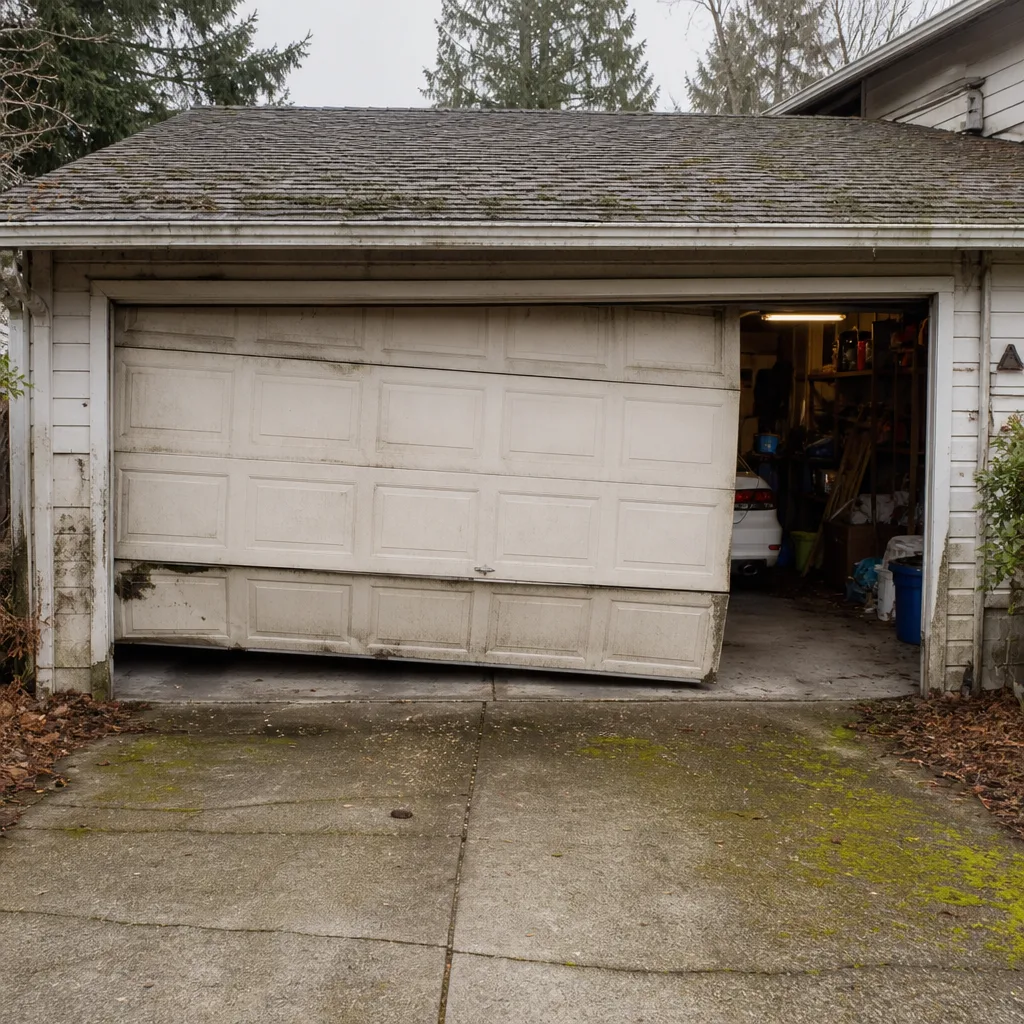 Before
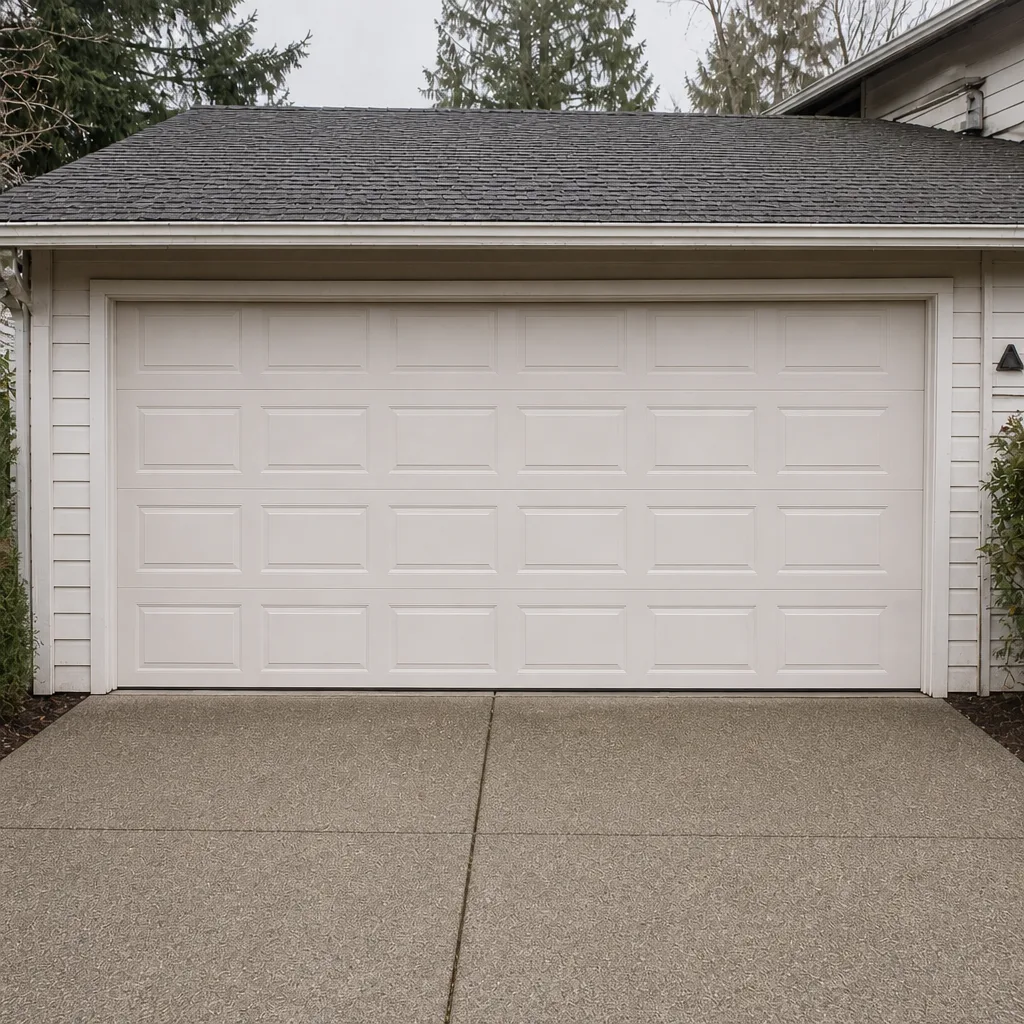 After
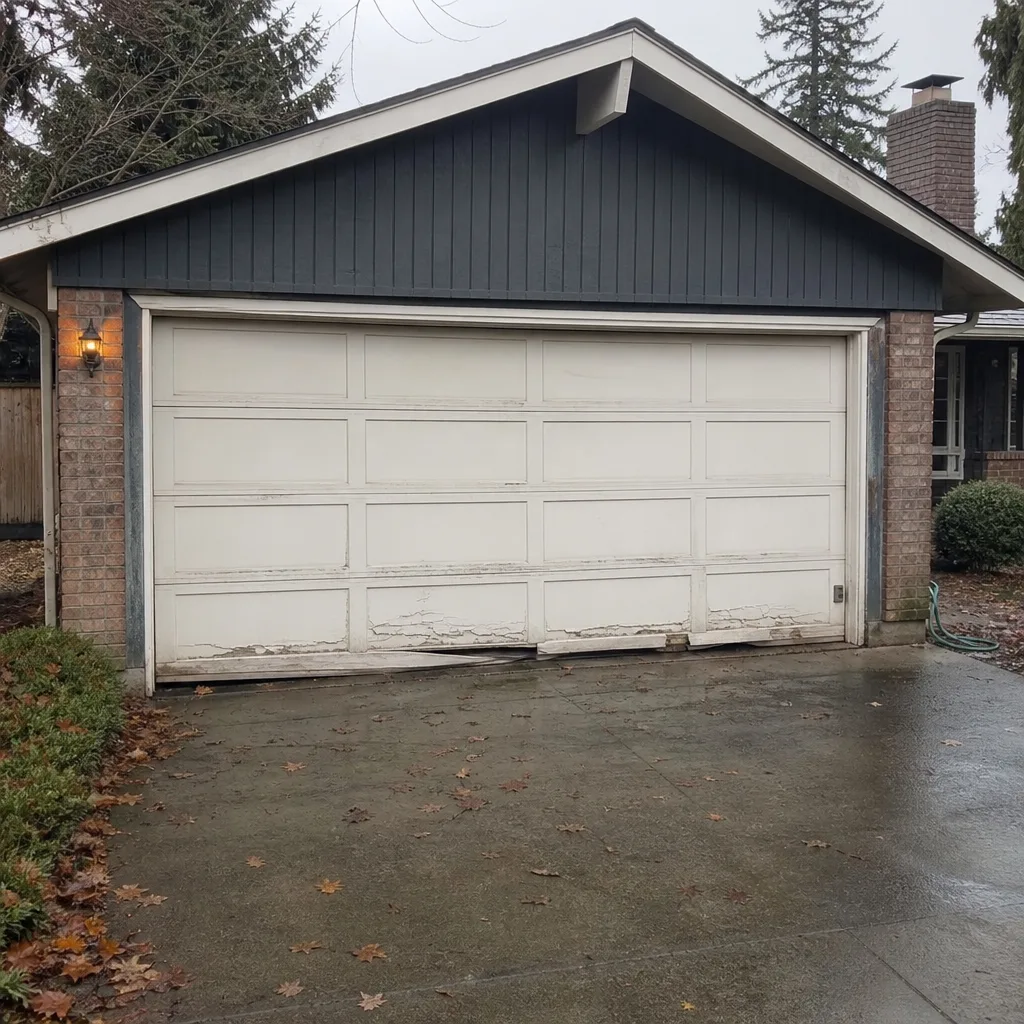 Before
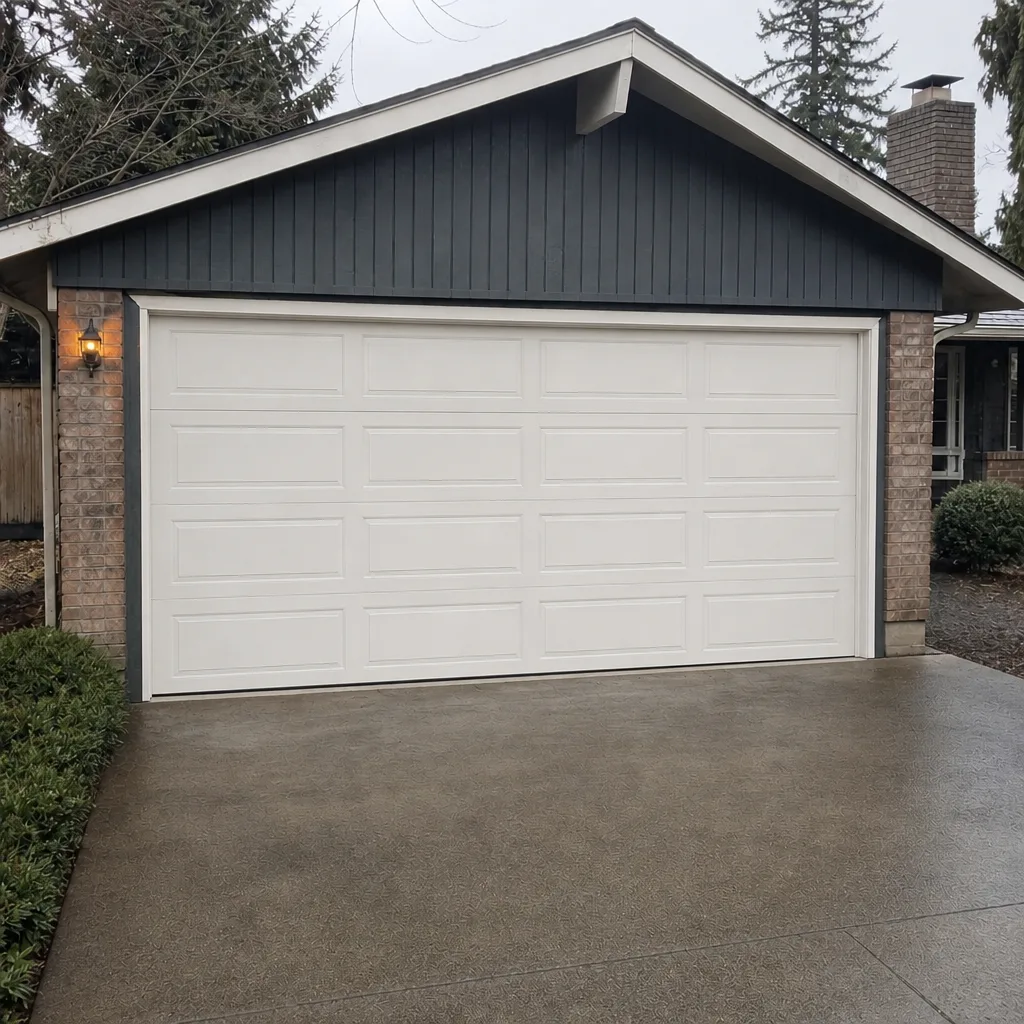 After
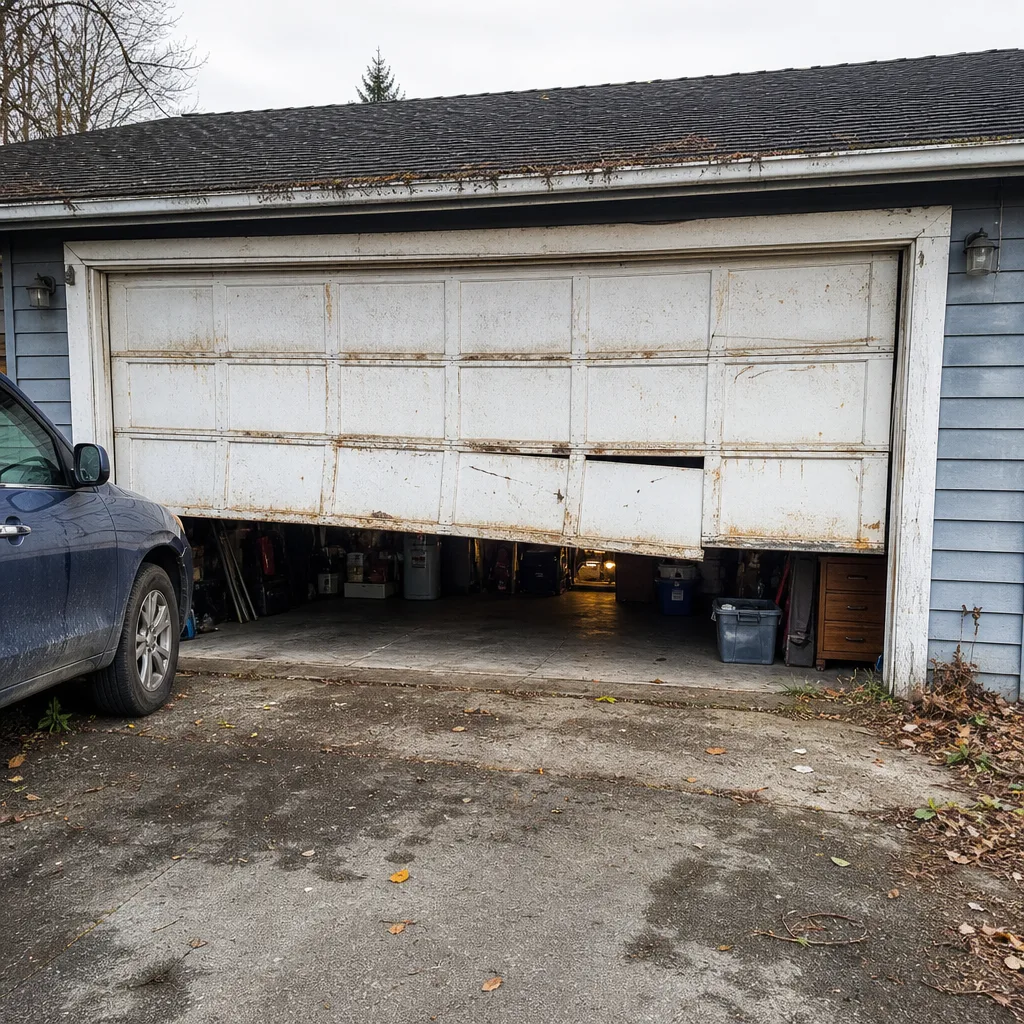 Before
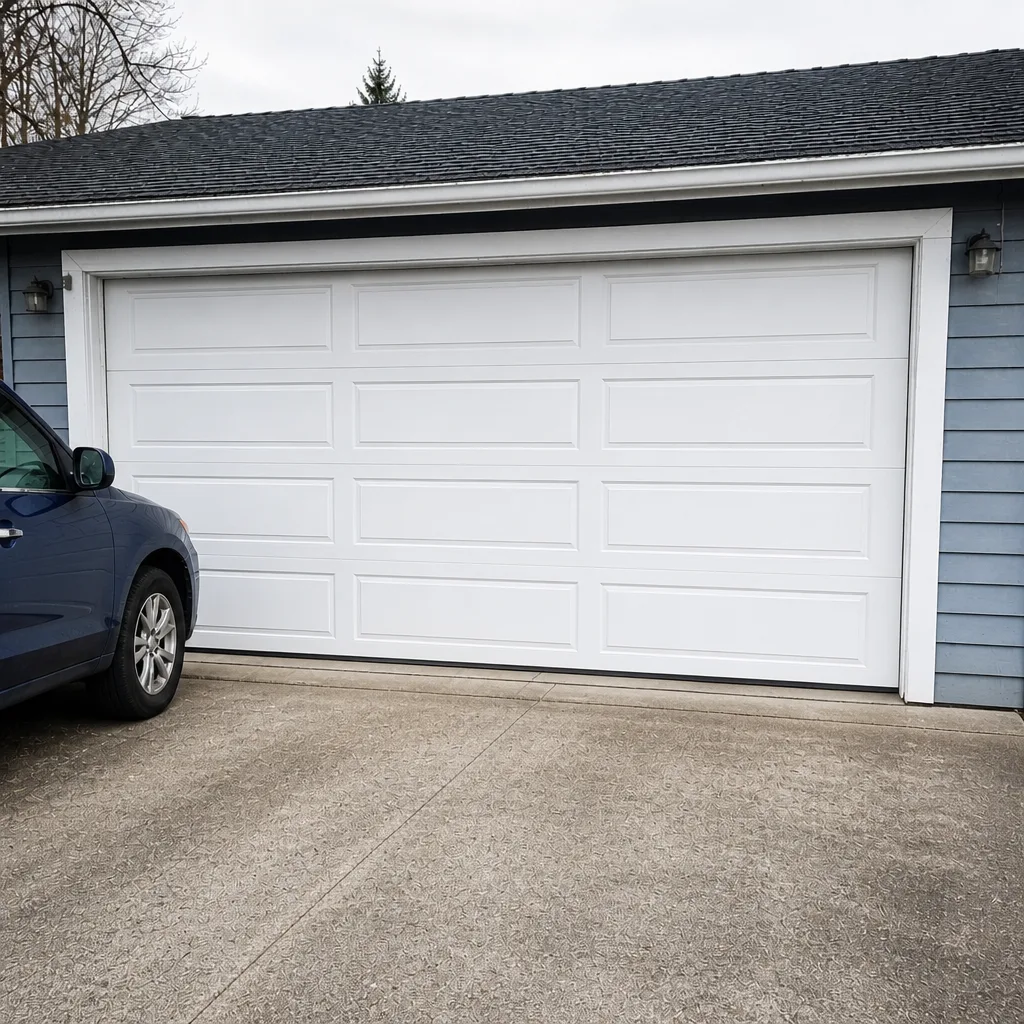 After
When to Call a Professional
Call a professional when you see a gap or break in the spring coil, when the door comes down hard or won’t close, when the door hangs unevenly on its tracks, or when the manual balance check fails. Also call before the cold months if your cycle-count math says the spring is near its rated life. Those are the situations where a same-day visit or an emergency callout earns its keep. Redmond Garage Door Repair Pros offers free estimates in Redmond – call (855) 337-2071. Our technicians have up to 14 years of experience with torsion and extension springs across Clopay, Amarr, and Wayne Dalton doors, and we’ll quote you a written price before we touch a wrench. If your door is stuck open and you’re worried about security, mention that on the call and we’ll prioritize the visit.
Frequently Asked Questions
Twice a year in Redmond, once in late fall and once in spring, with an extra pass mid-winter if the door is heavily used. Use a silicone-based or white lithium grease spray, not WD-40. Applying a light coat to the coil and the moving hardware is the cheapest spring maintenance you can do. A dry coil in the wet months grinds and wears faster.
No. Torsion springs store the full lifting force of the door and must be wound and unwound with a specific tool and technique. Extension springs carry safety concerns of their own. Homeowners can visually inspect and lubricate; the replacement is a professional job. A coil released under tension can cause serious injury.
Expect around $180 to $340 for a single spring replacement, and about double that for a matched pair, since the pair is roughly twice the single-spring estimate. The written estimate you receive before work begins sets the final price. Call (855) 337-2071 for an exact quote – estimates are free.
It means the spring has begun to fracture and should be replaced within the same day or next available slot. A widening gap is a fracture forming inside the coil. Don’t attempt to close it yourself. Call (855) 337-2071 and we’ll schedule the replacement.
Yes, both springs should be replaced together even when only one has broken. Matched springs wear at the same rate, and the second usually fails within weeks of the first. Replacing only the broken one drops the load onto a single coil. Check that your quote names a matched pair, and ask why if it doesn’t.
Many Wayne Dalton doors use their proprietary TorqueMaster system, which isn’t a standard torsion setup. Maintenance steps and replacement parts differ. If you’re unsure which type you have, a technician can identify it before any inspection or lubrication begins. Same applies to some Clopay and Amarr models with heavier panels.
The Bottom Line
Spring maintenance on a Redmond garage door comes down to four habits: identify whether you have torsion or extension springs, lubricate twice a year with the right product (not WD-40), watch for a gap in the coil and treat it as urgent, and replace matched pairs together. Run the cycle-count math once a year to know when you’re nearing end of life, and re-check everything in the fall before the cold mornings arrive. Everything beyond a visual check and a spray can belongs to a trained professional. The energy in a torsion spring doesn’t forgive a shortcut. Call (855) 337-2071 for a free estimate, and we’ll give you a written price before anything is touched.
Written by the team at Redmond Garage Door Repair Pros.