Last updated November 23, 2026
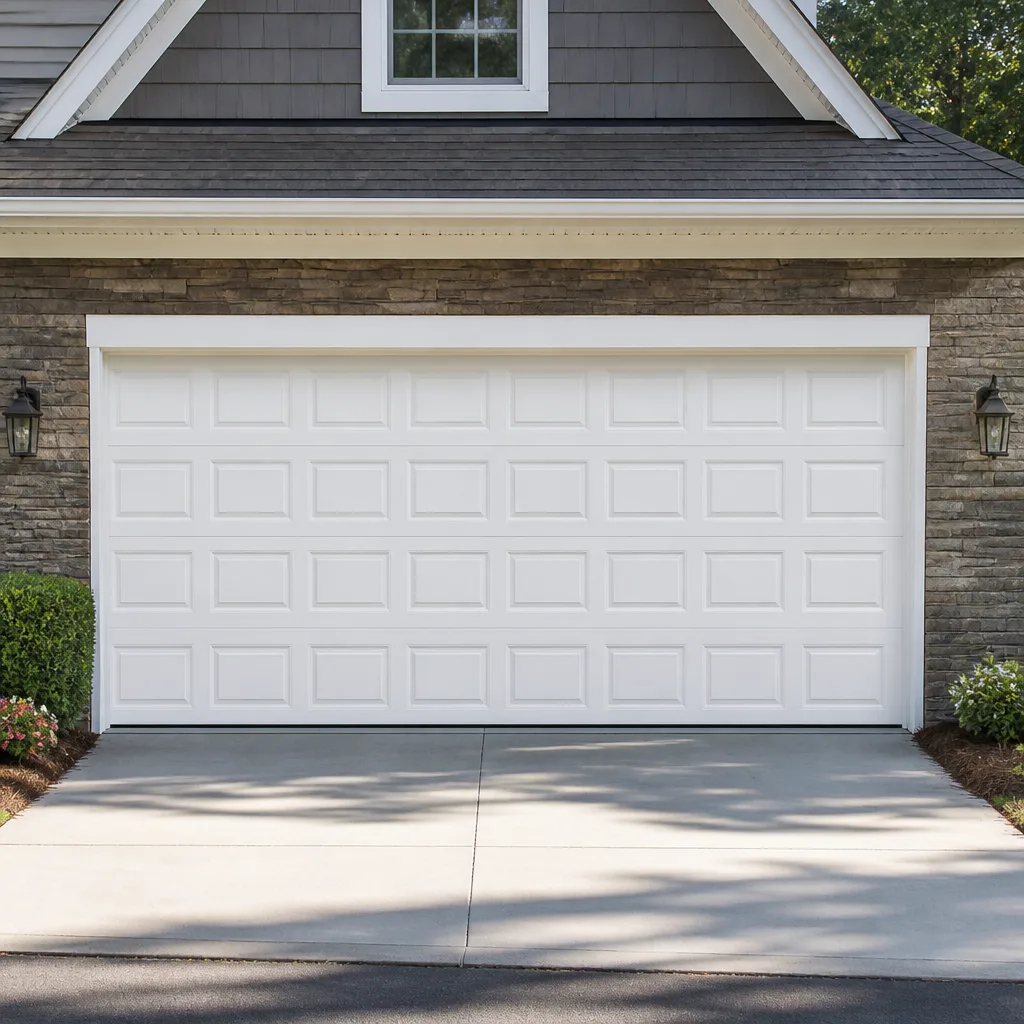 Raised-panel steel
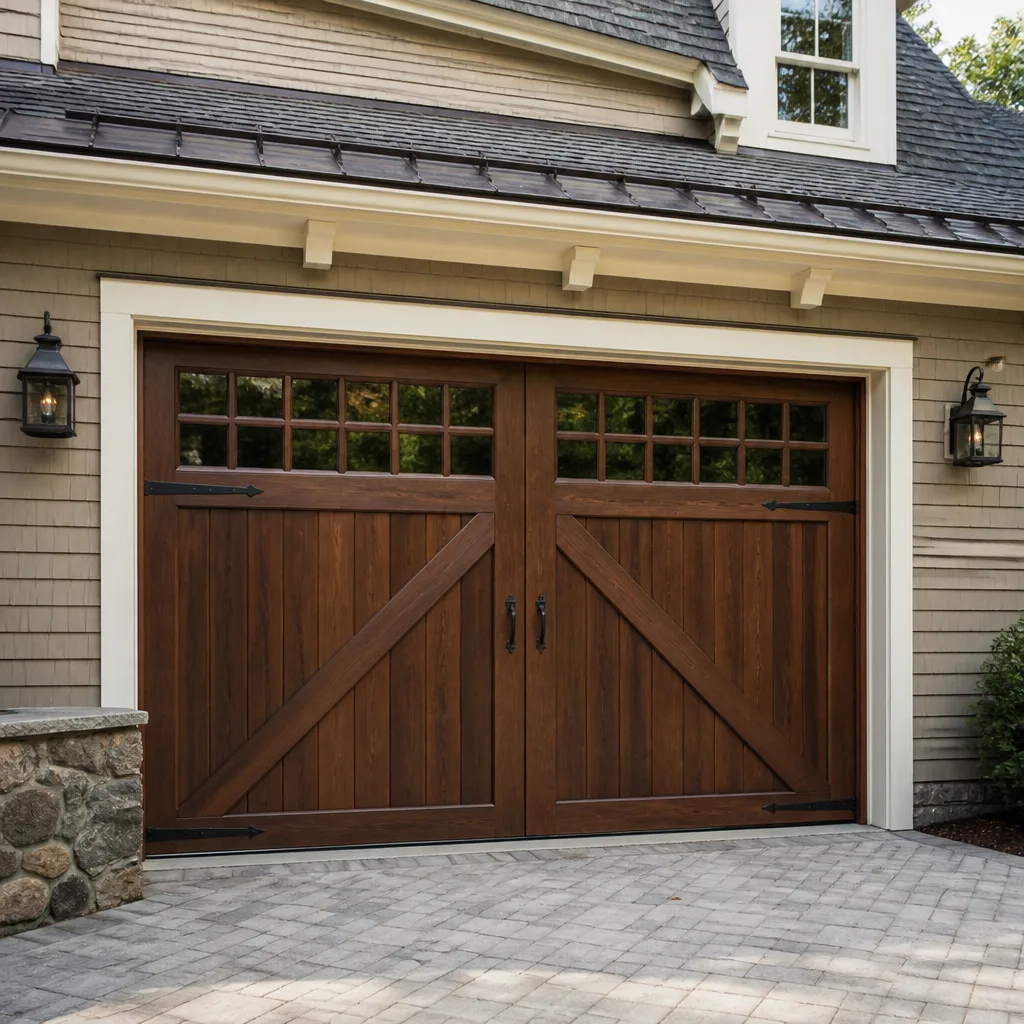 Carriage house
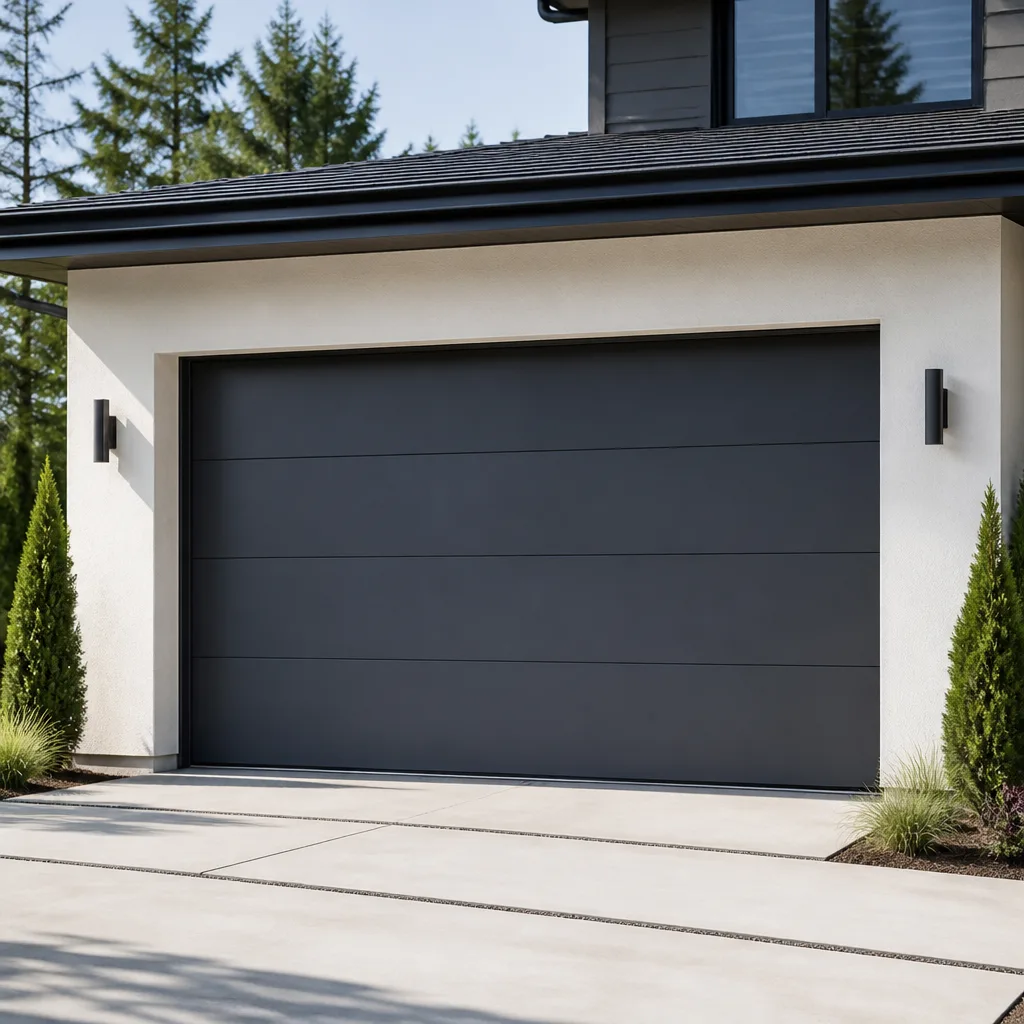 Modern flush
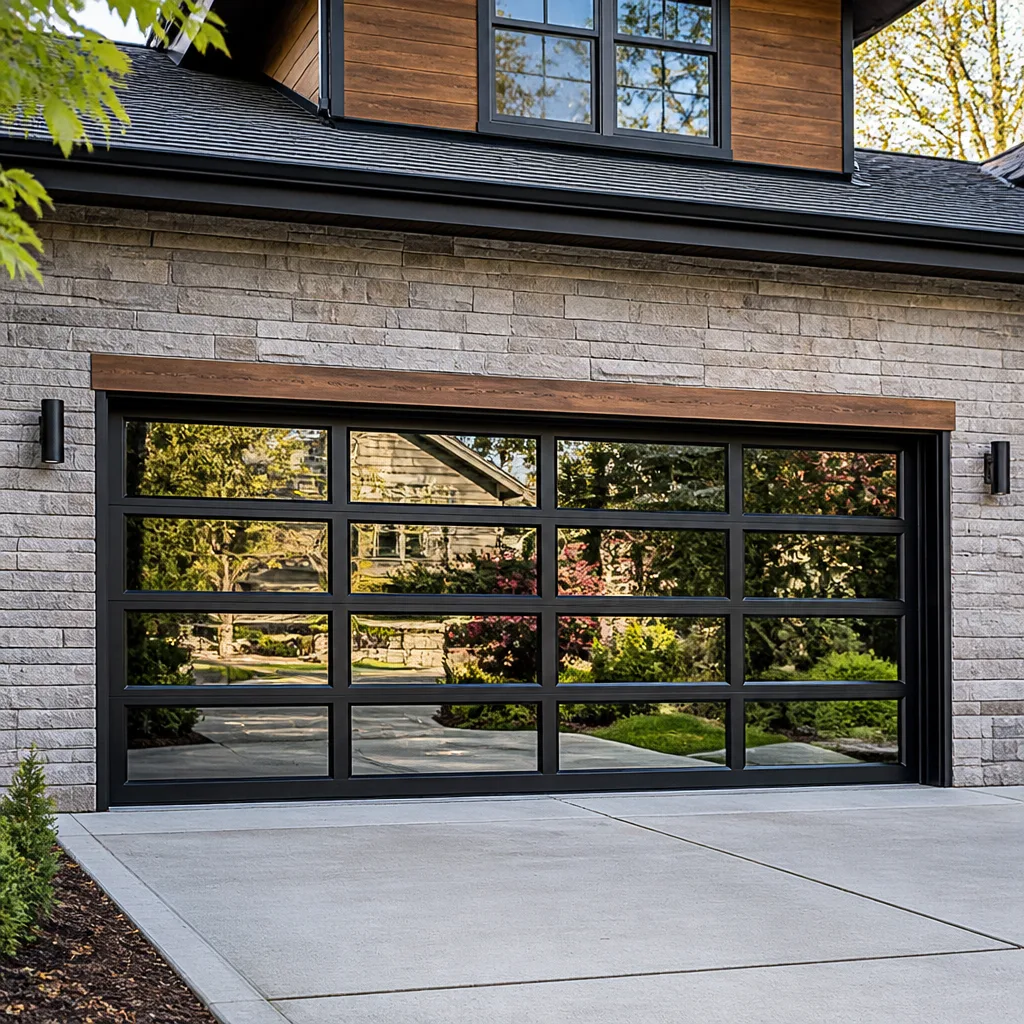 Full-view glass
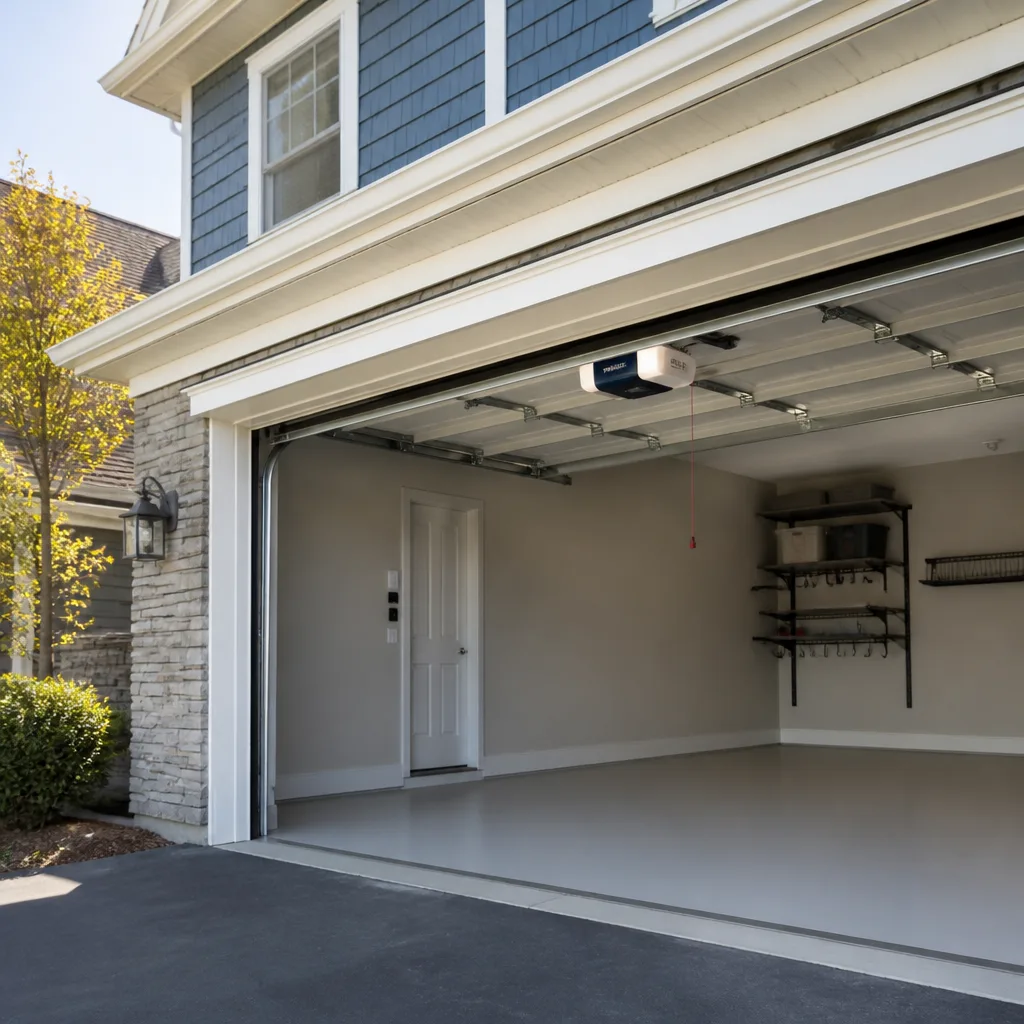 LiftMaster openers
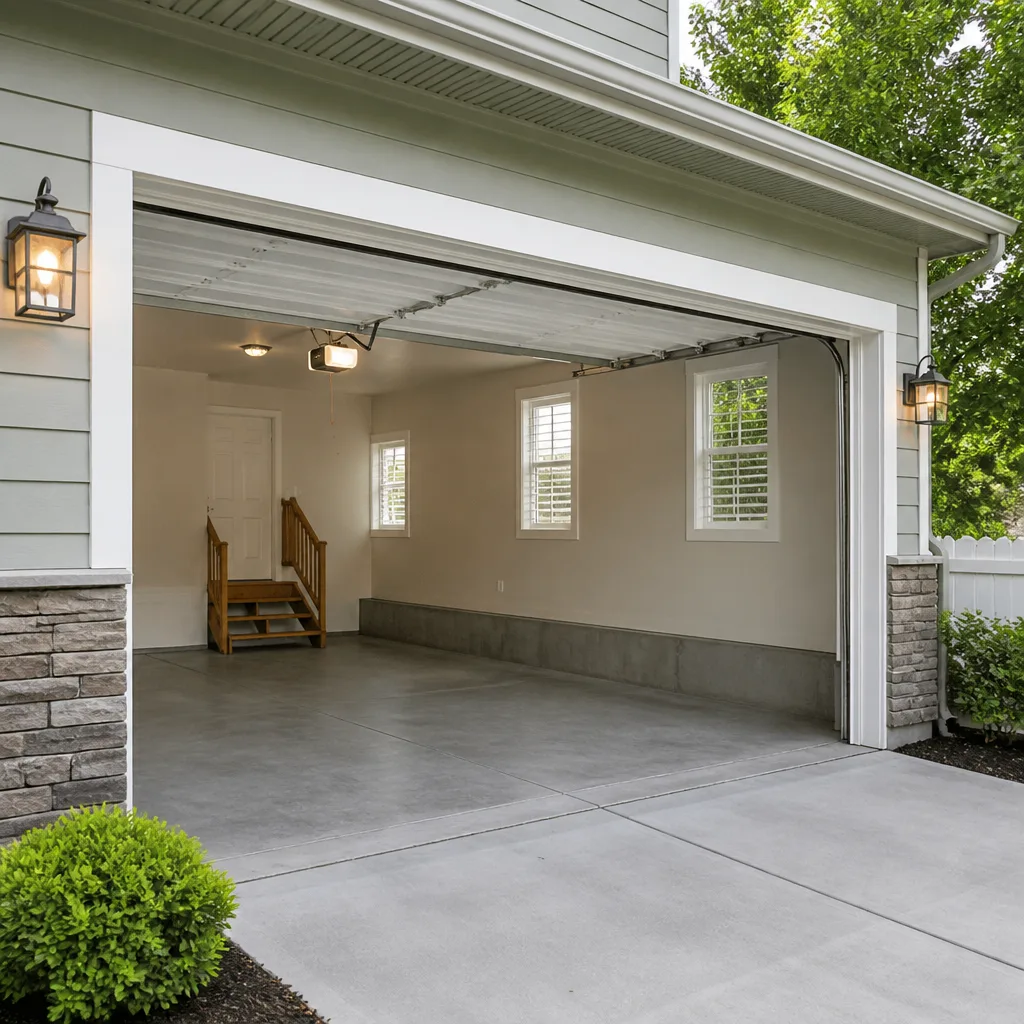 Chamberlain openers
Full 25-point door and opener safety check with every visit - springs, cables, rollers, tracks, and your LiftMaster or Chamberlain opener included
You get a price before we start. It does not change when the pro arrives.
Get your free estimateThe Complete Guide to Garage Doors in Redmond
Most garage door guides are written for Phoenix or Atlanta. Redmond gets 37+ inches of rain a year, and its neighborhoods are built around attached two-car garages facing the street. That combination changes nearly every recommendation you’ll read about springs, panels, openers, and materials. A door that performs fine in a dry climate can corrode, warp, or fail early here, and a style that looks great in a catalog may never clear your HOA. This guide decodes the local variables – the humidity, the freeze-thaw cycles on the Eastside, the HOA rules in neighborhoods like Education Hill and Idylwood, and the City of Redmond permit triggers – so you can make decisions built for your actual house. We’ll cover how each part of your garage door system works, what to look for, and when to call a professional.
Quick Answer
A garage door in Redmond needs three things to last: moisture-resistant materials that handle Pacific Northwest humidity, hardware rated for the daily cycle count of an attached-garage home, and a maintenance rhythm that accounts for freeze-thaw swings on the Eastside. Steel doors in a heavier gauge, composite panels, and sealed wood outperform light-gauge steel and untreated wood in this climate. Before you repair or replace anything, check your HOA’s architectural rules and confirm whether the City of Redmond requires a building permit for your specific project. When in doubt, get a written estimate from a specialist who knows your door and opener brand.
Styles & brands we work with
- Raised-panel steel
- Carriage house
- Modern flush
- Full-view glass
- LiftMaster openers
- Chamberlain openers
Table of Contents
- How a Garage Door System Actually Works
- Why Pacific Northwest Humidity Accelerates Wear
- Which Door Materials Hold Up Best in Redmond
- HOA Approval in Redmond Neighborhoods
- Residential Openers vs. Operators: Why Cycle Ratings Matter
- When a Redmond Door Swap Needs a Permit
- Repair or Replace? A Decision Framework
- A Seasonal Maintenance Rhythm for Redmond
How a Garage Door System Actually Works
Your garage door isn’t one product. It’s a system of four interacting parts: the door itself (panels, tracks, rollers, hinges), the counterbalance (torsion or extension springs and their cables), the operator (the opener motor and its rail or belt), and the safety devices (photo-eye sensors and, on newer units, the entrapment protection built into the operator). When one part drifts out of adjustment, the others wear faster. That’s why a door that “just needs a new opener” often turns out to have a spring problem that’s been overloading the motor for months.
In our experience, the single most misunderstood component is the spring. Torsion springs sit on a shaft above the door and do the heavy lifting; extension springs run alongside the tracks. Both store enormous mechanical energy. When a spring breaks – and it will eventually, since springs are rated in cycles, not years – the door becomes dangerously heavy and the opener is left pulling dead weight. We treat garage door spring repair as a front-line specialty for exactly this reason. It’s the highest-risk, highest-failure-rate part of any system.
The four subsystems at a glance
- Door and frame: panels, bottom seal, tracks, rollers, hinges.
- Counterbalance: torsion or extension springs, cables, drums, and the center bearing plate.
- Operator: the opener motor, drive system (belt, chain, or screw), and wall control.
- Safety: photo-eye sensors at the floor, plus the operator’s built-in reversal logic.
Understanding these four parts makes every other decision in this guide easier. When a technician diagnoses your door, they’re checking all four, not just the one that made the noise.
Why Pacific Northwest Humidity Accelerates Wear
Redmond averages more than 37 inches of rain a year, and that moisture does two things to a garage door that drier climates don’t have to worry about. First, it accelerates corrosion on anything steel – springs, cables, hinges, rollers, and track hardware. Second, it drives seasonal expansion and contraction in wood and composite panels that can lead to warping, delamination, and paint failure. National averages for spring lifespan assume a drier climate; here, springs and cables often show surface rust within a couple of seasons if they’re not protected.
The mechanism is simple. Every time the temperature drops, moisture condenses on cold metal inside the garage. Overnight, that film of water sits on unprotected steel. Over months, it becomes pitting, and pitting becomes a stress riser on a spring or a cable. That’s why we recommend inspecting cables and spring coils for rust at least twice a year in Redmond. It’s also why sealed or powder-coated hardware outlasts bare steel here.
What humidity does to each component
- Springs and cables: surface rust leads to pitting, which shortens cycle life.
- Wood panels: absorb moisture, swell, and can warp or separate at the seams.
- Steel panels: rust at seams, scratches, and the bottom edge where water collects.
- Rollers and hinges: seize or grind when lubricant washes away.
- Bottom seal: stiffens and cracks, letting water and pests into the garage.
The fix isn’t complicated. A light application of garage-door-specific lubricant on springs, hinges, and rollers twice a year keeps moisture from taking hold. Sealing the bottom edge of wood doors and touching up paint chips on steel doors does the rest.
Which Door Materials Hold Up Best in Redmond
Freeze-thaw cycles on the Eastside are the second climate variable most national guides skip. Redmond sits in a zone where winter temperatures routinely dip below freezing overnight and climb back above it during the day. That cycle puts repeated stress on door panels, seals, and hardware. The best material for a Redmond door isn’t the cheapest or the most stylish; it’s the one that handles that thermal movement without warping, cracking, or losing its finish.
Material comparison for Eastside homes
- Heavier-gauge steel (24-gauge or thicker): the most common choice in Redmond. Thicker steel resists dents and holds its shape through thermal swings. Look for a factory-applied finish and sealed seams.
- Composite: resists moisture and rot better than wood and won’t dent like steel. A strong option for homeowners who want a wood look without the upkeep.
- Aluminum: light and rust-resistant but dents more easily. Better suited to full-view or glass-panel designs than to high-traffic two-car doors.
- Wood: beautiful but the most moisture-sensitive. Only worth it if you’re committed to sealing and repainting on a schedule.
- Insulated steel: adds rigidity and helps moderate garage temperature, which matters when your garage shares a wall with the house.
For most Redmond homes with attached two-car garages, a heavier-gauge insulated steel door is the practical default. It handles humidity, resists dents from daily use, and holds its finish. Composite is the upgrade path if you want a wood aesthetic without the seasonal maintenance. When we install doors from Clopay or Amarr, we walk through gauge, insulation, and finish options in the context of your specific exposure – a door facing the weather on the street side wears differently than one tucked under a deep overhang.
HOA Approval in Redmond Neighborhoods
Redmond has a high density of neighborhoods with homeowners associations, and that shapes what you can actually install. Education Hill and Idylwood are two examples where HOA architectural review is common. Before you sign a contract for a new door, request your HOA’s architectural guidelines and confirmation of any required approval process. Skipping that step is the most expensive mistake in this guide – an unapproved door can mean removal and replacement at your cost.
What HOAs typically control
- Color: many associations restrict doors to a defined palette or require the door to match the home’s trim.
- Style: raised-panel vs. carriage-house vs. full-view glass is often specified.
- Window placement: some rules prohibit top-row windows on doors facing the street.
- Materials: a few associations limit visible wood or require a factory finish.
- Hardware: decorative hinges and handles may need approval if they’re visible from the street.
The practical move is to get HOA approval in writing before you order. Most associations have a standard submittal form; the review is usually quick once you provide a spec sheet and a photo of your home. If your door brand offers a design tool – Clopay and Amarr both do – grab a rendering of your chosen style in your home’s color and include it with the submittal. It speeds the review and prevents surprises.
Residential Openers vs. Operators: Why Cycle Ratings Matter
People use “opener” and “operator” interchangeably, but they mean slightly different things. The opener is the residential unit most homeowners picture – a motor with a rail or belt that pulls the door up. The operator is the broader term for the drive system, and it’s the term used when talking about cycle ratings and duty cycles. A residential opener rated for 10-15 cycles a day is fine for a detached garage used twice a day. It’s not fine for a Redmond attached-garage home where the door is the main entry and exit for a family of four.
That’s the local detail national guides miss. In Redmond, the attached garage is often the primary door – the one everyone uses to come and go, load groceries, walk the dog, take out the recycling. A door that sees 15-20 cycles a day needs hardware and an opener rated for that duty. A light-duty builder-grade unit will wear out faster, and the springs will hit their cycle count sooner.
How to size an opener for a Redmond home
- Count daily cycles. Every family member who uses the door counts as at least two cycles (up and down). Add drive-in and drive-out trips.
- Match the duty rating. Choose an opener rated well above your daily cycle count, not right at it.
- Check the drive type. Belt drives are quieter and better for attached garages; chain drives are louder but durable; screw drives are less common.
- Confirm smart compatibility. If you want app control or voice assistant integration, confirm the model supports it – LiftMaster and Chamberlain both offer WiFi-enabled units.
- Verify safety features. Photo-eye sensors and auto-reverse are non-negotiable, especially with kids or pets in the house.
We work across the dominant platforms – LiftMaster, Chamberlain, Genie, and Craftsman – and diagnose by brand logic rather than guesswork. That matters when an opener starts behaving oddly: a LiftMaster with a flashing error code has a specific meaning, and so does a Genie with a reversing door. Brand familiarity is how you get it garage door opener repair right the first time instead of swapping parts.
When a Redmond Door Swap Needs a Permit
Whether your door replacement needs a City of Redmond building permit depends on what you’re changing. A like-for-like swap – same size, same type of door, same opening – often does not require a permit, but the rules around structural changes, new openings, and changes to the header or framing do. The safest approach is to call the City of Redmond building department with your specific scope before you order anything. Don’t rely on a general rule you read online; the answer depends on your project.
What counts as a permit trigger varies by jurisdiction, and Redmond is no exception. If you’re widening an opening, changing the door type from a sectional to a roll-up, adding a new opening entirely, or modifying the header, that’s typically the kind of work that needs a permit and an inspection. A straight replacement of a broken door with a matching one usually falls outside that. But “usually” isn’t a guarantee, so confirm with the city. Getting a permit answer in writing before you sign a contract keeps the project on schedule.
What to ask the building department
- Does my project involve a structural change to the opening or header?
- Is a like-for-like replacement exempt from permitting in my case?
- Do I need a final inspection after installation?
- Are there any seismic or wind-load requirements for my address?
Permits aren’t a reason to avoid a replacement – they’re a reason to plan. A short call to the city saves weeks of delay later. If your project is a repair or an installation, we can walk through the scope with you and point out where permits usually come up. For a standard garage door repair, permitting is usually not part of the picture; for a full new door and opener, it’s worth a check.
Repair or Replace? A Decision Framework
The repair-or-replace question comes down to four variables: the age of the door, the nature of the failure, the cost of the fix relative to a replacement, and whether the door is still safe to use. A door with a single broken spring is a repair. A door with warped panels, a rusted-through bottom section, and an opener twice as old as the door is usually a replacement. The middle cases need a written estimate and a candid conversation.
Repair signals
- One broken spring, with the rest of the door in good shape.
- An opener that fails to reverse or keeps losing its travel limits.
- A bent roller, a worn hinge, or a noisy track.
- A door that’s off its rails after a minor impact.
Replacement signals
- Multiple panels warped, rusted, or delaminated.
- A spring failure on a door already near the end of its service life.
- A door you can no longer get parts for, or a discontinued model.
- Major cosmetic deterioration that no finish will fix.
If you’re on the fence, ask for a written estimate for both repair and replacement, with a clear explanation of what each covers. That comparison is the single best decision tool. For a door that’s failing structurally, cost is not the only factor – a door that’s lost its counterbalance or has paper-thin panels is genuinely dangerous to operate, and it should be evaluated by a technician before anyone uses it again.
A Seasonal Maintenance Rhythm for Redmond
Redmond’s climate rewards a simple, consistent maintenance rhythm over expensive one-off interventions. Two checks a year – one before the wet season, one in spring – catch most problems while they’re still small. The routine takes about 20 minutes and prevents most of the spring, cable, and opener failures we see.
- Inspect springs and cables for rust. Look at every coil and the full length of each cable. Surface rust is a warning sign; pitting is a call-us-now sign.
- Lubricate springs, hinges, and rollers. Use a garage-door-specific lubricant, not WD-40. Wipe off excess.
- Test the balance. Disconnect the opener and lift the door halfway. It should stay put. If it drops or rises, the springs are out of balance.
- Check the photo-eye sensors. Wipe them clean and confirm the door reverses when you pass an object through the beam.
- Examine the bottom seal. Cracked or stiff seals let water in. Replace before the wet season.
- Listen for new noises. Grinding, popping, or banging under load is a signal, not a quirk.
Springs and cables are under high tension, and adjusting them requires the right tools and a working knowledge of how torsion and extension systems store energy. That’s a job for a trained technician, not a weekend project. If a spring is broken or a cable is frayed, stop using the door and call a professional. The rest of the list – lubrication, sensor cleaning, seal replacement – is safe to do yourself.
Common Mistakes to Avoid
- Assuming a national average applies to Redmond. Spring lifespans and wood-door durability are climate-dependent. A lifespan figure from a drier climate will overestimate how long your springs and panels will last here, so budget for replacement on a Redmond-specific timeline.
- Ordering a door before checking HOA rules. In Redmond neighborhoods like Education Hill and Idylwood, an unapproved color or style can mean removal at your cost. Get written approval first.
- Skipping the permit question. A structural change to the opening or header usually triggers a City of Redmond permit. Call the building department with your exact scope before you order.
- Replacing a broken spring with one, when the pair is due. Torsion and extension springs are usually replaced as a matched pair. Replacing one leaves the other a cycle count away from failure.
- Lubricating with the wrong product. WD-40 displaces moisture but isn’t a long-term lubricant. Use garage-door-specific spray, and never lubricate the tracks – that attracts grit.
- Ignoring opener error codes. A flashing light or a door that reverses without an obstacle is the opener telling you something specific. Brand-specific diagnosis beats swapping parts.
- Letting a rusty cable go. A frayed cable can snap. It’s a cheap fix and an expensive failure, and in a Redmond garage that sees 37 inches of rain a year, cables rust faster than you’d expect.
See the difference
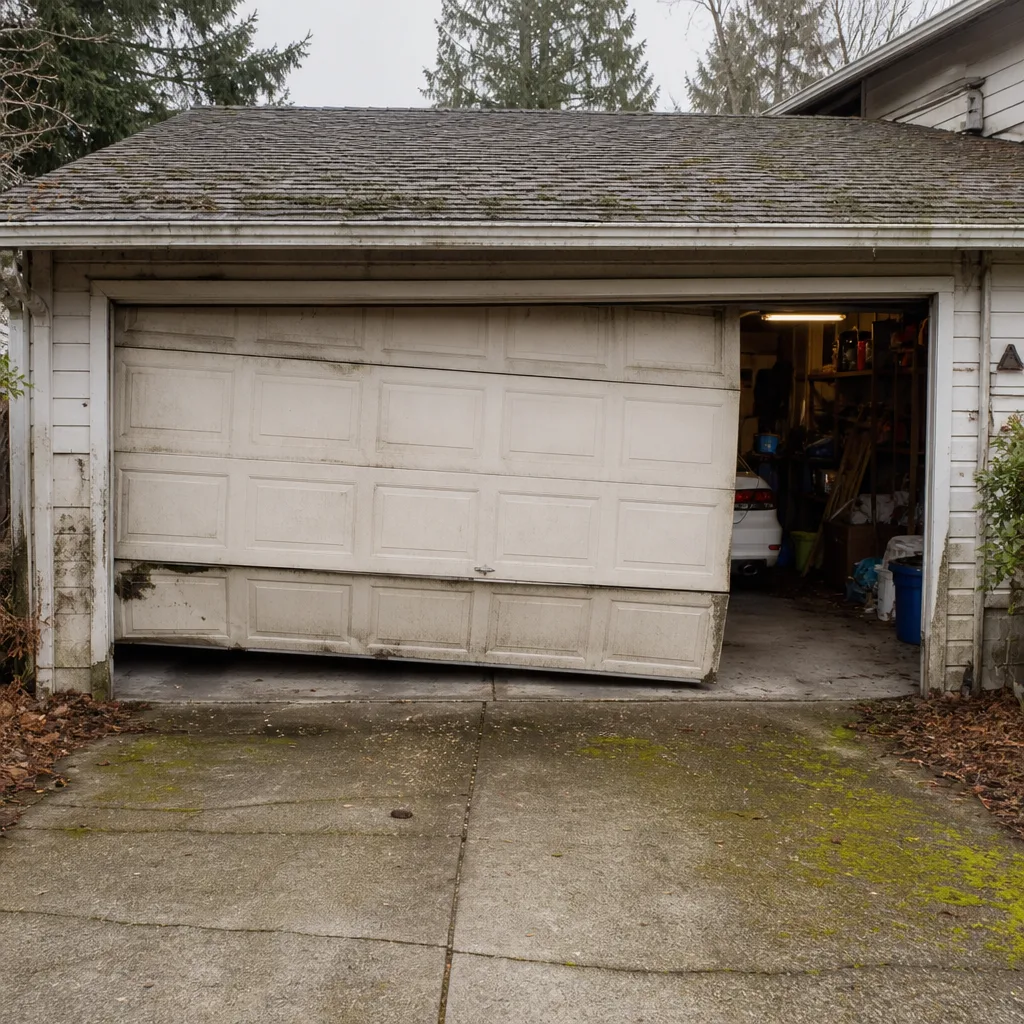 Before
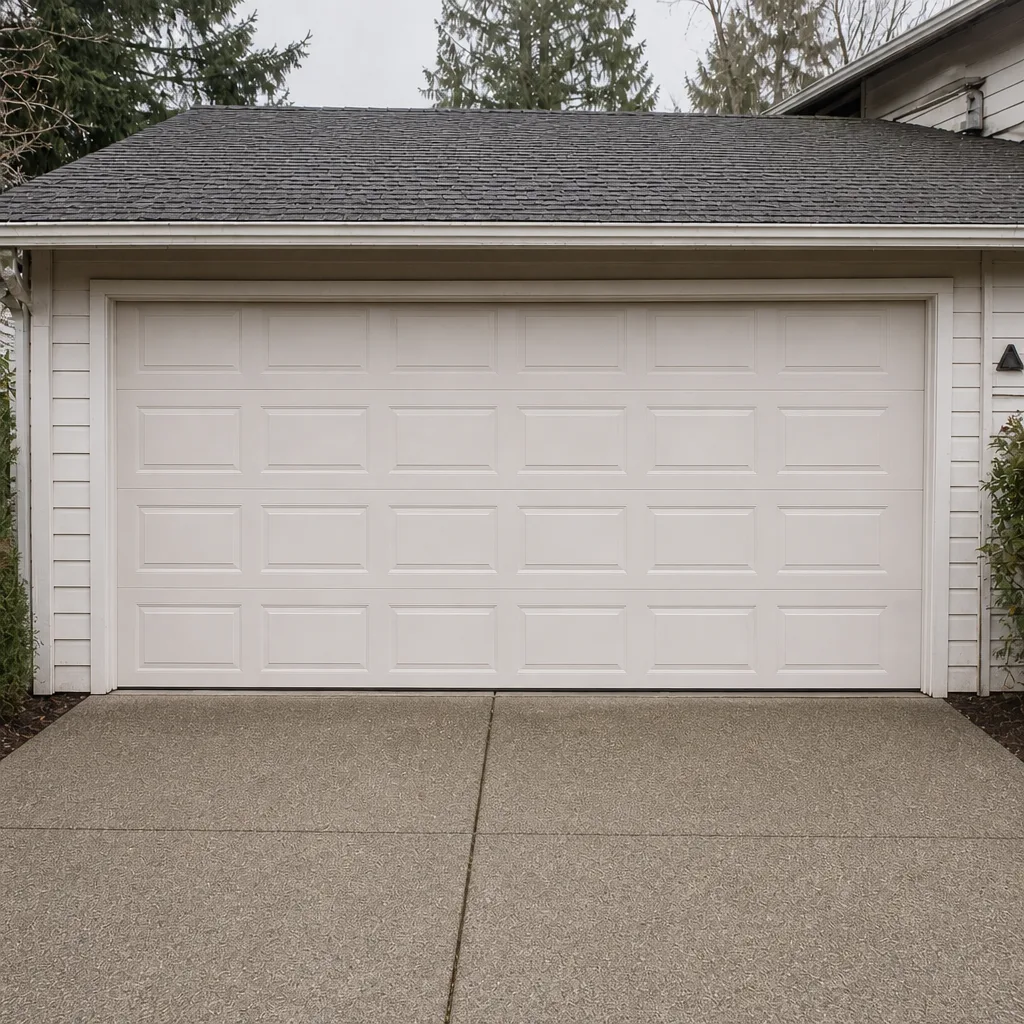 After
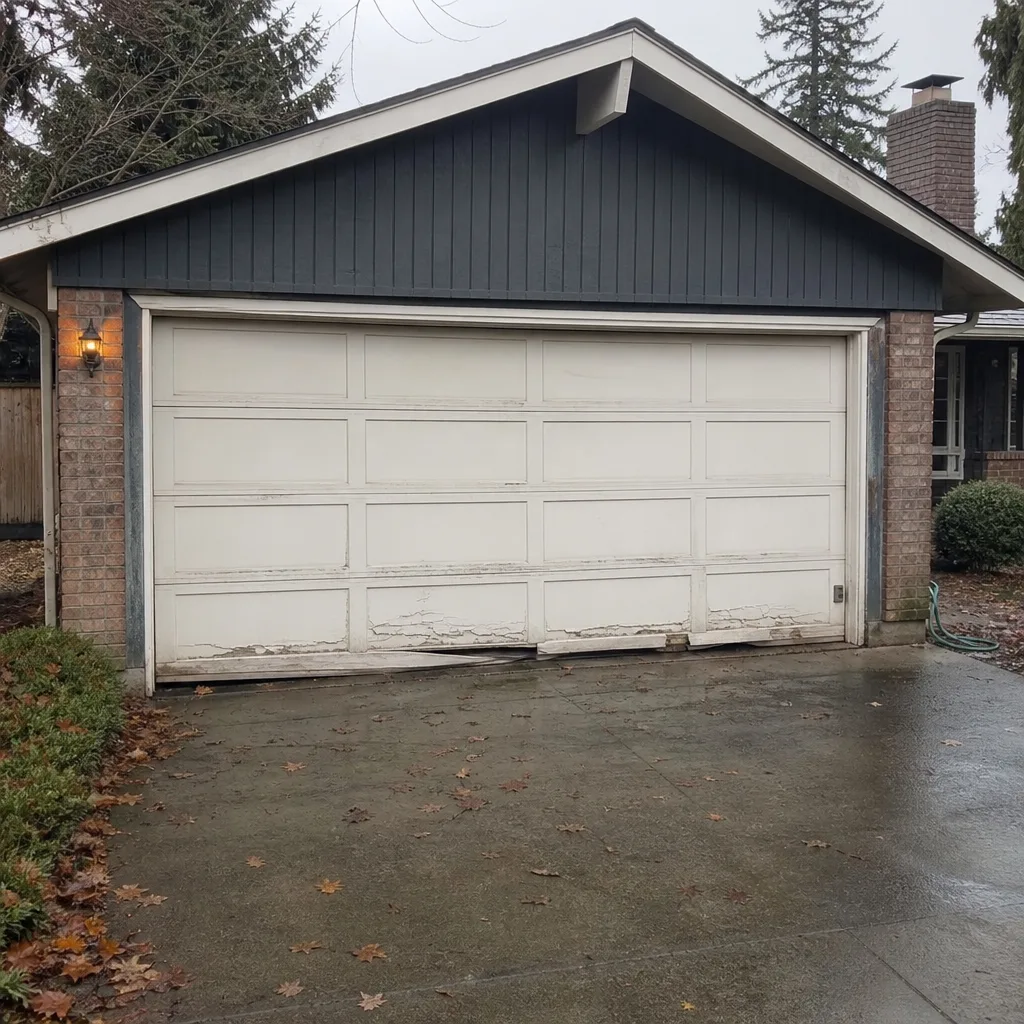 Before
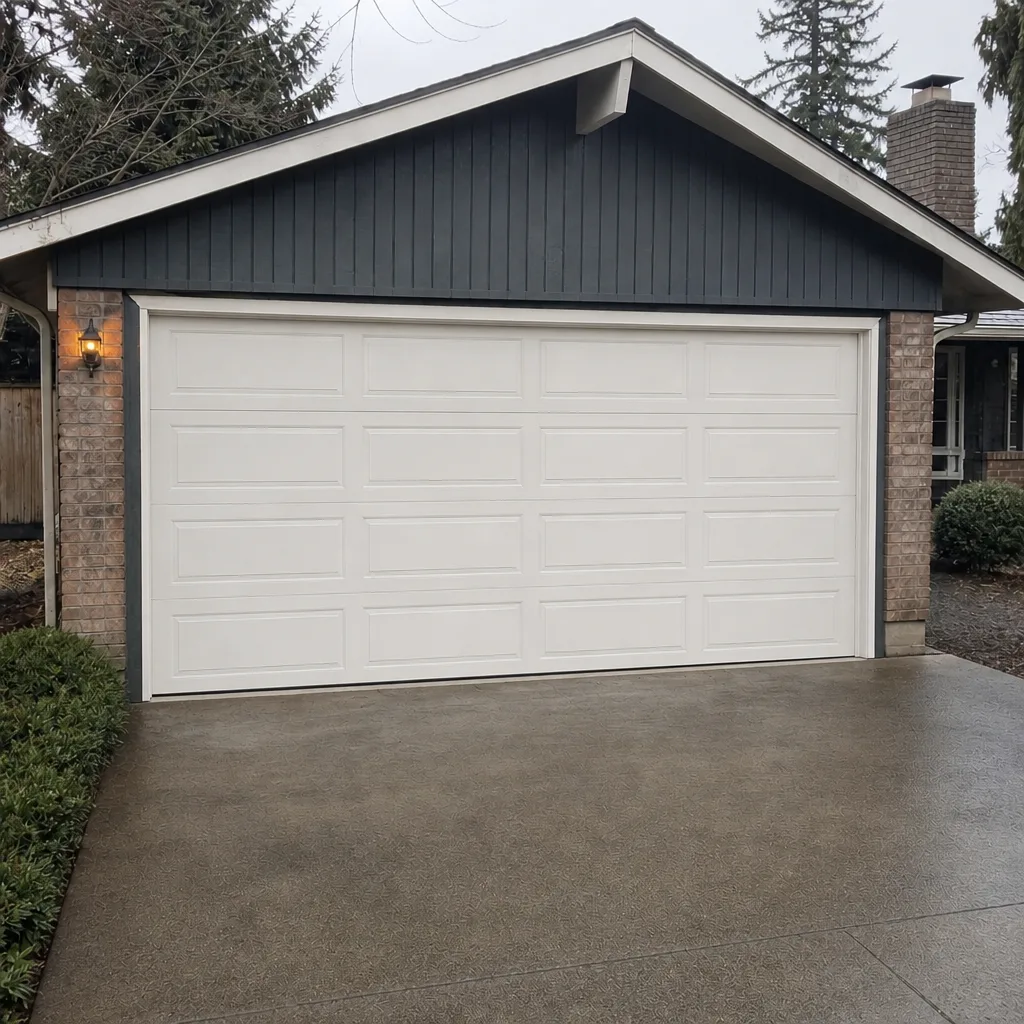 After
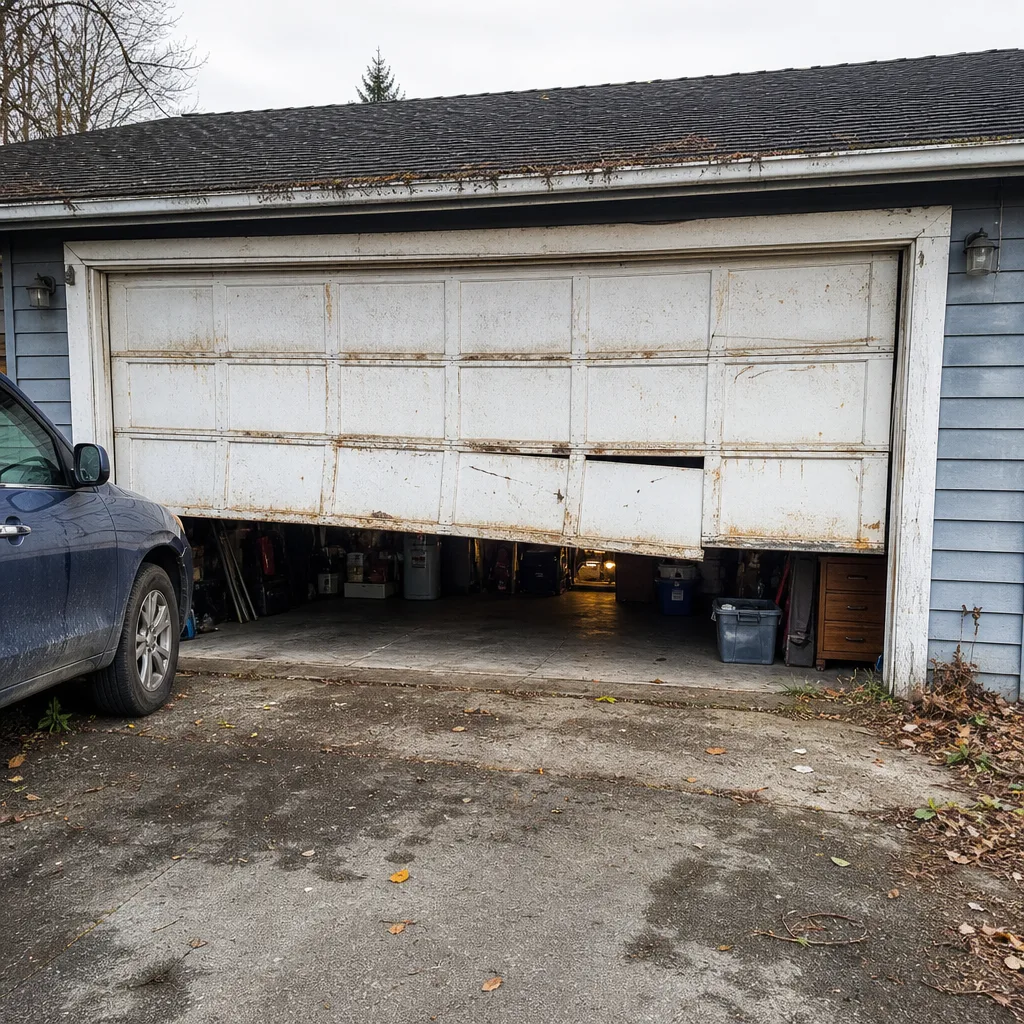 Before
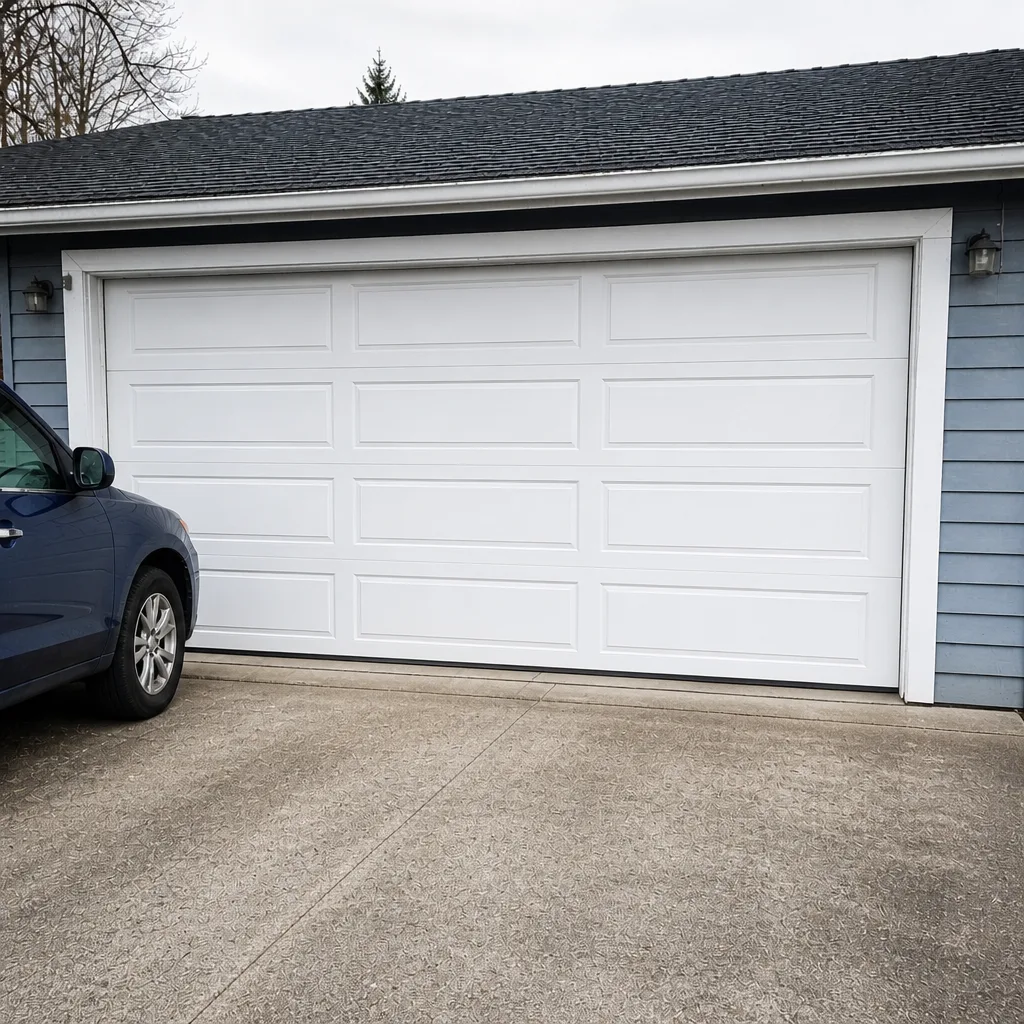 After
When to Call a Professional
Call a professional any time the counterbalance is involved – a broken spring, a frayed cable, a door that won’t stay open. High-tension springs and cables can cause serious injury, and the work needs the right tools and training. Call us if the opener reverses unexpectedly, if the door is visibly off its tracks, if a panel is cracked or separating, or if your door has started making new noises under load. Emergency situations – a door stuck open overnight, a car trapped inside, a door that won’t close and leaves your home exposed – are what our emergency garage door service is for. Redmond Garage Door Repair Pros offers free estimates in Redmond – call (855) 337-2071. Our technicians have up to 14 years of experience, and we work on your brand, from a broken spring to a brand-new door.
Frequently Asked Questions
Springs last a set number of cycles, not a set number of years, and Pacific Northwest humidity shortens that life by accelerating corrosion. A door used 15-20 times a day in an attached-garage home can wear through its spring cycle count faster than a door in a drier climate or a detached garage used twice a day. Inspect springs and cables twice a year for rust, and call for an estimate if you see pitting or hear a loud snap. Call (855) 337-2071 for an exact quote – estimates are free.
It depends on the scope. A like-for-like replacement of the same size and type often does not require a permit, but structural changes to the opening, header, or framing do. Call the City of Redmond building department with your specific project details before you order; that’s the only reliable answer. If your project is a replacement or install, we can walk through the scope with you and flag where permits usually come up. Estimates are free – call (855) 337-2071.
Heavier-gauge insulated steel is the practical default for most Redmond homes. It resists dents, handles the Eastside’s freeze-thaw cycles, and holds its finish better than light-gauge steel or untreated wood in a climate with 37+ inches of rain a year. Composite is the upgrade path if you want a wood look with less maintenance. Aluminum works for full-view designs but dents more easily under daily two-car traffic. Call (855) 337-2071 to talk through the right material for your home.
Most Redmond HOAs will approve a new door if you follow the process. Request the architectural guidelines, choose a color and style from the approved list, and submit a spec sheet with a rendering of your home. Neighborhoods like Education Hill and Idylwood are more likely to have specific rules on color and style, so confirm before ordering. Get approval in writing. If you’re unsure what your HOA allows, we can help you understand the options. Call (855) 337-2071 for a free estimate.
The price depends on size, material, insulation, and whether you’re adding an opener. A written, itemized estimate is the only way to know your specific number. We quote the price before any work starts, and the written estimate sets the final price – so you’re not surprised by the invoice. Call (855) 337-2071 for an exact quote; estimates are free.
In most cases yes. Opener failures are one of the most common same-day repair calls we get, and brand knowledge matters – a LiftMaster, Chamberlain, Genie, or Craftsman unit each has its own diagnostic logic and failure patterns. Call (855) 337-2071 and we’ll help you figure out whether it’s a same-day fix or a scheduled repair. Estimates are free.
The Bottom Line
Redmond isn’t Phoenix, and its garage doors shouldn’t be treated like they are. The three variables that matter most here are climate – 37+ inches of rain a year and freeze-thaw cycles on the Eastside – HOA density in neighborhoods like Education Hill and Idylwood, and the attached-garage layout that makes the garage door the home’s main entry. Get all three right and you’ll choose a door and opener that last. Get them wrong and you’ll pay twice. Start with a written estimate, confirm the permit and HOA picture before you order, and call a specialist for anything involving springs or cables. If you’re ready to talk through your project, Redmond Garage Door Repair Pros is here for the full arc – from a single spring to a complete new door and opener.
Ready to get a written estimate?
Whether you’re facing a broken spring, an opener that won’t reverse, or a full door replacement, we’ll give you a straight answer and a written price before any work starts. Call (855) 337-2071 for a free estimate. Estimates are free, pricing is upfront, and we’ll walk you through the options for your specific door system.
Written by the team at Redmond Garage Door Repair Pros.